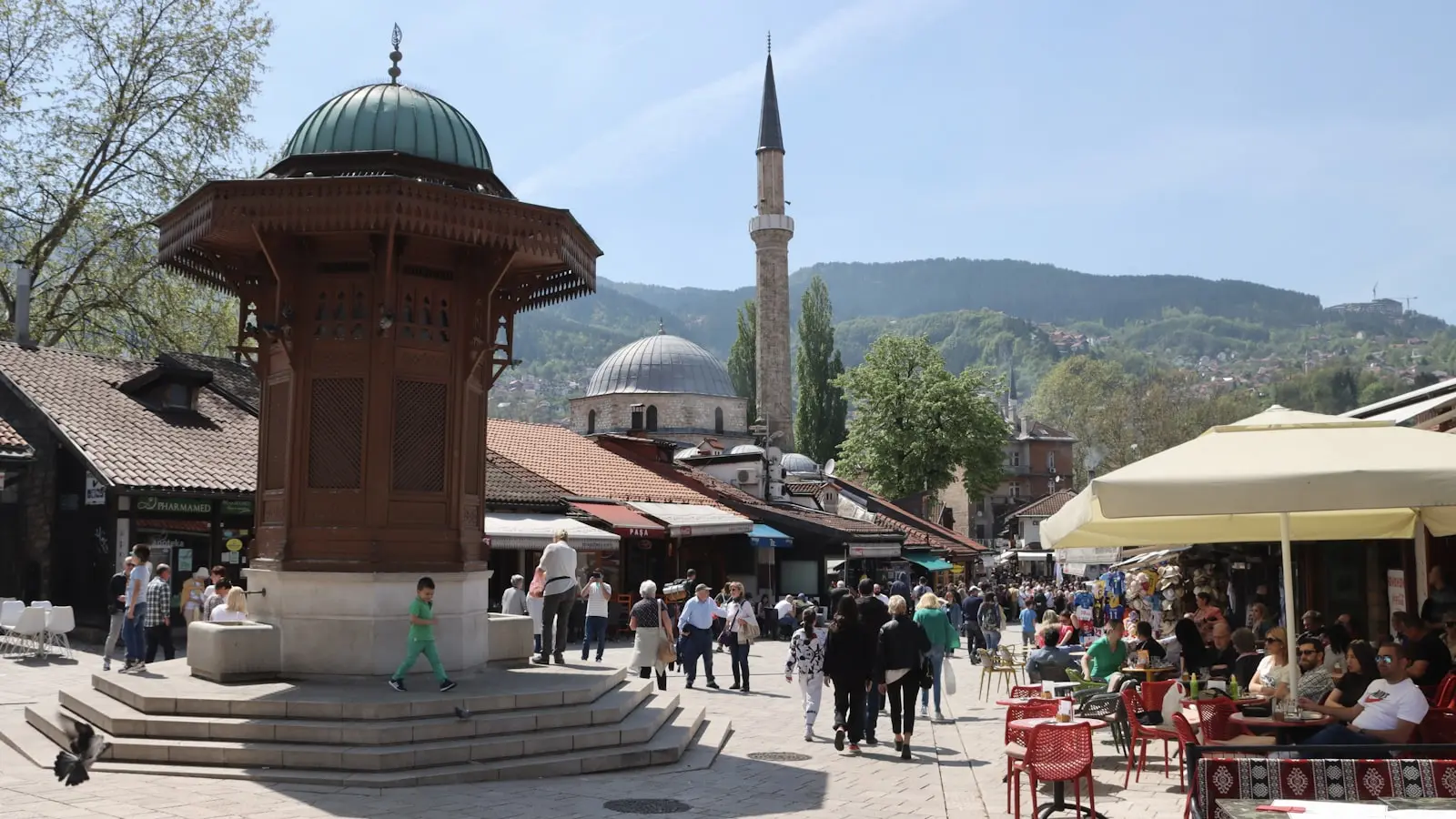
The Real Risk of Traveler’s Diarrhea in Sarajevo’s Baščaršija
Visitors to Bosnia often ask about food safety in Sarajevo’s historic Baščaršija district, where street food stalls line cobblestone alleys. The question is not whether traveler’s diarrhea occurs — it does, and reports vary by vendor. The real question is which selection criteria separate a safe meal from a bout of gastroenteritis. Reddit’s travel community, particularly on r/travel, provides a crowdsourced dataset worth examining alongside established public health guidelines.
What the Reddit Consensus Reveals
Experienced backpackers on Reddit emphasize a few recurring rules. Stick to stalls with high turnover. Avoid raw vegetables. Drink only bottled or boiled water. Choose grilled meats like ćevapi served fresh off the fire. Skip ice unless you are certain of its source. Carry oral rehydration salts. The logic behind each recommendation maps directly onto the microbiology of foodborne illness.
Turnover matters because bacteria multiply in the “danger zone” between 4°C and 60°C. A busy stall that sells out within hours leaves little time for pathogen replication. Conversely, pre-prepared items sitting at ambient temperature for four or more hours accumulate a bacterial load sufficient to trigger symptoms in a naive gut. (The Reddit community often calls this a rite of passage — it does not need to be.)
The Mechanisms Behind the Advice
Traveler’s diarrhea is most commonly caused by enterotoxigenic Escherichia coli (ETEC), followed by Campylobacter jejuni, Shigella species, and norovirus. These pathogens contaminate food through fecal-oral routes. Street food in Baščaršija is not inherently hazardous, but the absence of municipal inspection at every stall means the burden of risk assessment falls on the consumer.
High-heat cooking — grilling over charcoal, for instance — rapidly reduces bacterial load if the internal temperature exceeds 74°C. This is why ćevapi and other grilled meats earn safe status. The same logic explains why raw vegetables are problematic: washing with potentially contaminated water does not remove all pathogens, and no cooking step exists to kill them. Peeled fruits are safer than leafy greens.
Ice presents a different risk vector. Freezing preserves bacteria rather than killing them. If the water used to make ice is not potable — and many street vendors use tap water — the ice becomes a vehicle for infection. The Reddit advice to avoid ice is consistent with global travel medicine guidelines.
The Data Behind the Recommendations
Public health surveillance in Bosnia is limited, but a 2019 study of traveler’s diarrhea among tourists in the Balkans found attack rates ranging from 20 to 40 percent depending on dietary habits. (The study’s sample size was small, but the pattern matches broader Mediterranean data.) Risk increased with consumption of undercooked meat, raw produce, and tap water. The same study noted that adherence to simple hygiene rules — hand washing, avoiding street food from stalls without visible handwashing stations — reduced risk by at least half.
No randomized trial has specifically tested Sarajevo street food vendors, but observational data from similar settings suggest that stalls with high customer volume correlate with lower bacterial counts. This is not speculation — it is basic food microbiology. Every time a vendor reheats a portion that has sat for hours, the heat may kill bacteria but not always eliminate heat-stable enterotoxins already produced. The safe strategy is to watch for a queue of locals.
Practical Application: How to Eat Safely in Baščaršija
The consensus from both Reddit and clinical guidelines can be operationalized into a step-by-step assessment.
- Observe the stall before ordering. Does it have a steady stream of customers? Are locals eating there? If the stall is empty during peak meal hours, move on.
- Watch the cooking process. Meat should be cooked to order, not reheated from a pile. The surface should be hot enough to produce audible sizzling when fresh meat hits the grill.
- Check water sources. Bottled water is ubiquitous and cheap. Avoid refilling your own bottle from public fountains unless you boil it first.
- Skip the raw salad. Even if the vendor offers a side of lettuce and tomato, the risk is not worth the negligible nutritional benefit. Stick to cooked vegetables or fruit you can peel yourself.
- Carry oral rehydration salts. If diarrhea occurs, early rehydration prevents electrolyte imbalance. Oral rehydration salts are cheap, lightweight, and available at any pharmacy in Sarajevo.
When the Advice Fails
No prevention method is absolute. Even the most careful diner can encounter a contaminated batch. The mistake is to assume that a single bout of traveler’s diarrhea ruins the trip. Most cases resolve within 24 to 48 hours with rest and rehydration. Bloody diarrhea, high fever, or persistent vomiting warrants medical attention. Sarajevo’s hospitals are well-equipped for gastrointestinal infections. (The Reddit community sometimes panics over a stomach cramp — a calm response is more useful.)
The real failure mode is blaming all street food indiscriminately. The evidence supports targeting the risk factors, not the cuisine. Grilled meats from a busy stall represent a lower hazard than a salad from a high-end restaurant that uses untreated tap water to wash lettuce. The risk profile flips depending on preparation method.
The Bottom Line
Traveler’s diarrhea in Sarajevo is a solvable problem. The Reddit community’s advice aligns with medical literature: prioritize stalls with high turnover, choose cooked-to-order meats, avoid raw produce and ice, and stay hydrated with safe water. The data do not support avoiding street food entirely — they support choosing it carefully. The difference between a delicious ćevapi and a miserable night is the gap between a vendor who rotates stock every 20 minutes and one who keeps the same batch on display for hours.
Sarajevo’s Baščaršija offers some of the most memorable street food in the Balkans. The risk is manageable with disciplined selection. The signal is clear: eat where locals eat, watch the food being cooked, and keep a packet of oral rehydration salts in your pocket. That is not wellness fluff. It is applied microbiology.