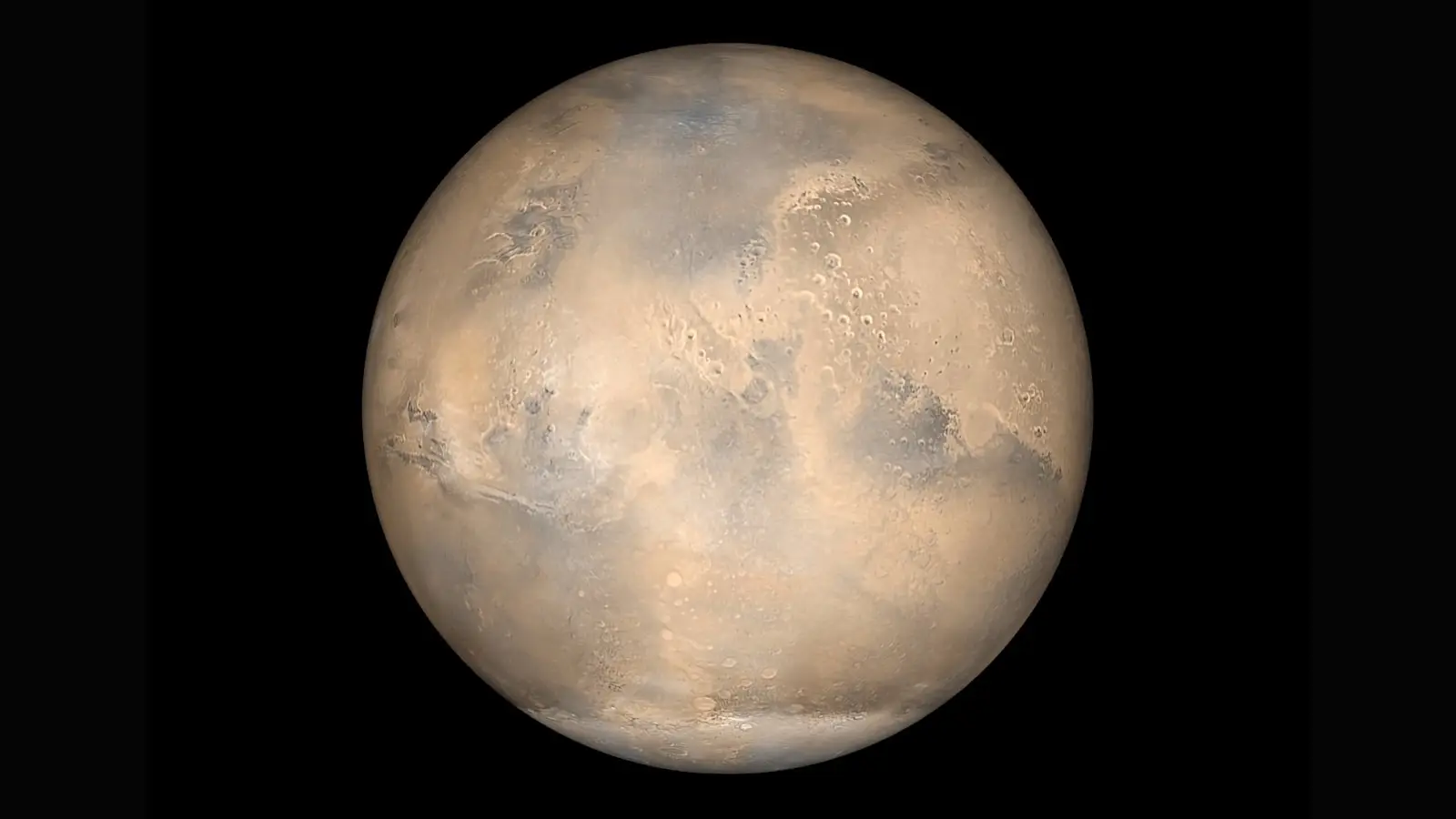

The transmission was deceptively calm. After a series of automated checks and a final burn from its methane-fueled engines, the SpaceX Starship Human Landing System (HLS) settled onto the grey, cratered regolith near the Shackleton crater rim. A voice from Mission Control confirmed the landing, and with that, humanity returned to the lunar surface, this time with a far grander objective than flags and footprints. The four astronauts of Artemis IV—a crew representing NASA, the European Space Agency (ESA), and the Japan Aerospace Exploration Agency (JAXA)—are not just visitors; they are pioneers for an interplanetary supply chain.
Their seven-day mission at the Moon’s south pole is a meticulously planned operation designed to answer a single, critical question: can the Moon serve as a refueling station for Mars? The crew’s primary tasks involve geological surveys, deploying habitation modules, and, most importantly, prospecting for accessible water ice within the permanently shadowed regions (PSRs). These craters, which have not seen sunlight in billions of years, are theorized to hold vast quantities of frozen water. This resource is the cornerstone of NASA’s long-term strategy, a pivot from the Apollo-era equatorial landings to a new industrial and scientific frontier.
The Artemis program, from its uncrewed orbital test flight in 2022 to the crewed lunar flyby of 2024, has been a deliberate, incremental march toward this moment. Unlike the geopolitical sprint of the 1960s, this new lunar ambition is grounded in economic and logistical pragmatism. Establishing a sustained human presence on the Moon is not the end goal but a necessary stepping stone. The immense gravitational well of Earth makes launching every kilogram of fuel, water, and oxygen for a Mars mission prohibitively expensive. The Artemis architecture bets that sourcing these essentials from the Moon’s shallow gravity well will fundamentally change the economics of deep space exploration.
The Strategic Imperative of Lunar Water Ice
The entire rationale for the south pole landing hinges on the simple chemistry of water (H2O) and the brutal physics of the rocket equation. To send a crewed mission to Mars and back requires an astronomical amount of propellant. Lifting that mass from Earth’s surface is a battle against gravity that compounds with every added kilogram. This is the tyranny of the rocket equation: the fuel needed to lift the fuel becomes the dominant mass of the spacecraft, leaving little room for crew, scientific instruments, or supplies. A lunar base capable of harvesting water ice fundamentally breaks this equation.
Through a process called electrolysis, solar or nuclear power can split water into its constituent elements: hydrogen and oxygen. Liquid hydrogen serves as a high-performance rocket fuel, and liquid oxygen acts as the oxidizer. Together, they form a potent propellant combination. By producing this propellant on the Moon, a Mars-bound spacecraft could launch from Earth with a minimal fuel load, travel to lunar orbit, and then fully fuel up at a depot like the Gateway station. This is the concept of in-situ resource utilization (ISRU), and its success is central to making humanity a multi-planetary species. The Artemis IV crew is effectively drilling for the resource that could power the next generation of exploration.
Their mission will test prototype drills and processing equipment designed to extract and analyze ice-rich regolith. The data they collect on the concentration, depth, and purity of the ice will inform the design of future robotic mining operations. If the deposits are as extensive and accessible as orbital surveys suggest, the Moon will transition from a scientific outpost to a vital logistics hub in the solar system. (Frankly, without it, the Mars road map remains largely theoretical).
A New Lunar Geology Unlocked by the South Pole
While ISRU provides the economic justification, the scientific allure of the south pole is equally profound. The permanently shadowed craters are more than just cosmic freezers for water; they are pristine time capsules. For billions of years, these regions have acted as cold traps, capturing volatile compounds delivered by comets and asteroids. The samples the Artemis IV astronauts collect will be unlike anything brought back by the Apollo missions.
Scientists expect these ice-rich samples to contain a frozen record of the early solar system. By analyzing the isotopic ratios and organic compounds trapped within the ice, researchers can gain unprecedented insights into the origin of Earth’s water and the building blocks of life. Did the water that fills our oceans arrive via icy bodies from the outer solar system? The south pole holds the clues. This mission is not just about enabling the future; it is about decoding the distant past.
The Apollo missions explored the Moon’s ancient, sun-baked equatorial regions, revealing a history of volcanism and impact events. The Artemis missions to the poles are opening an entirely new field of lunar science: cryogeology. Understanding how volatiles are transported and trapped on airless bodies has implications far beyond our own Moon, informing the search for resources on asteroids and other planets.
The Engineering and Geopolitical Realities of a Lunar Base
Operating at the lunar south pole presents a unique and brutal set of engineering challenges. Temperatures within the PSRs can plummet to -250° Celsius (-418° Fahrenheit), among the coldest known temperatures in the solar system. Equipment must be designed to withstand these cryogenic conditions without becoming brittle or failing. The fine, abrasive lunar dust, or regolith, remains a persistent threat, capable of infiltrating seals, degrading mechanical parts, and posing a health risk to astronauts.
Power generation is another significant hurdle. While the interiors of the craters are permanently dark, their rims receive near-continuous sunlight. This makes them ideal locations for solar arrays, but it requires precise landing and the infrastructure to transmit power into the shadowed work zones. Alternatively, small-scale nuclear fission power sources are being developed to provide constant energy regardless of lighting conditions. The Artemis IV mission will test some of these systems on a small scale, gathering performance data crucial for designing a permanent base.
The mission also unfolds against a backdrop of renewed geopolitical competition. While NASA leads the multinational Artemis Accords coalition, China and Russia are collaborating on their own proposed International Lunar Research Station (ILRS), also targeting the south pole. The rush to access and utilize lunar resources has raised complex legal and diplomatic questions about property rights in space. (The new space race is less about flags and more about mining claims). The successful landing of Artemis IV establishes a powerful precedent, demonstrating a capability that solidifies the Artemis coalition’s leading position.
Validating the Mars Architecture on a Closer Proving Ground
Ultimately, every system and procedure being tested during the Artemis IV mission is a dress rehearsal for Mars. The Moon serves as the ideal proving ground—a high-fidelity analogue for a Martian environment that is only a three-day journey from home. If a critical system fails or a medical emergency occurs, the crew has a viable path back to Earth. No such safety net exists on a mission to Mars, which involves a multi-year commitment with no possibility of a quick return.
The Starship HLS that carried the crew to the surface is a variant of the same vehicle architecture SpaceX intends to use for its Mars missions. Its performance during lunar descent, surface operations, and ascent is a critical validation of the design. The advanced life support systems, closed-loop water recycling, and dust mitigation techniques being tested inside the crew’s surface habitat are all technologies required for a long-duration stay on Mars. The extravehicular activity (EVA) suits are designed for greater mobility and durability than their Apollo predecessors, preparing astronauts for the extensive geological fieldwork that a Mars expedition will demand.
By building and testing its Mars-forward technologies on the Moon, NASA is systematically retiring risk. It is a methodical, engineering-driven approach designed to ensure that when humans finally set foot on the Red Planet, they do so with systems that have been rigorously tested in a relevant off-world environment. The ice samples collected by the Artemis IV crew may one day be analyzed in a lab on Mars, but first, the machinery of deep space exploration must be proven to work in our own celestial backyard. The work has begun.