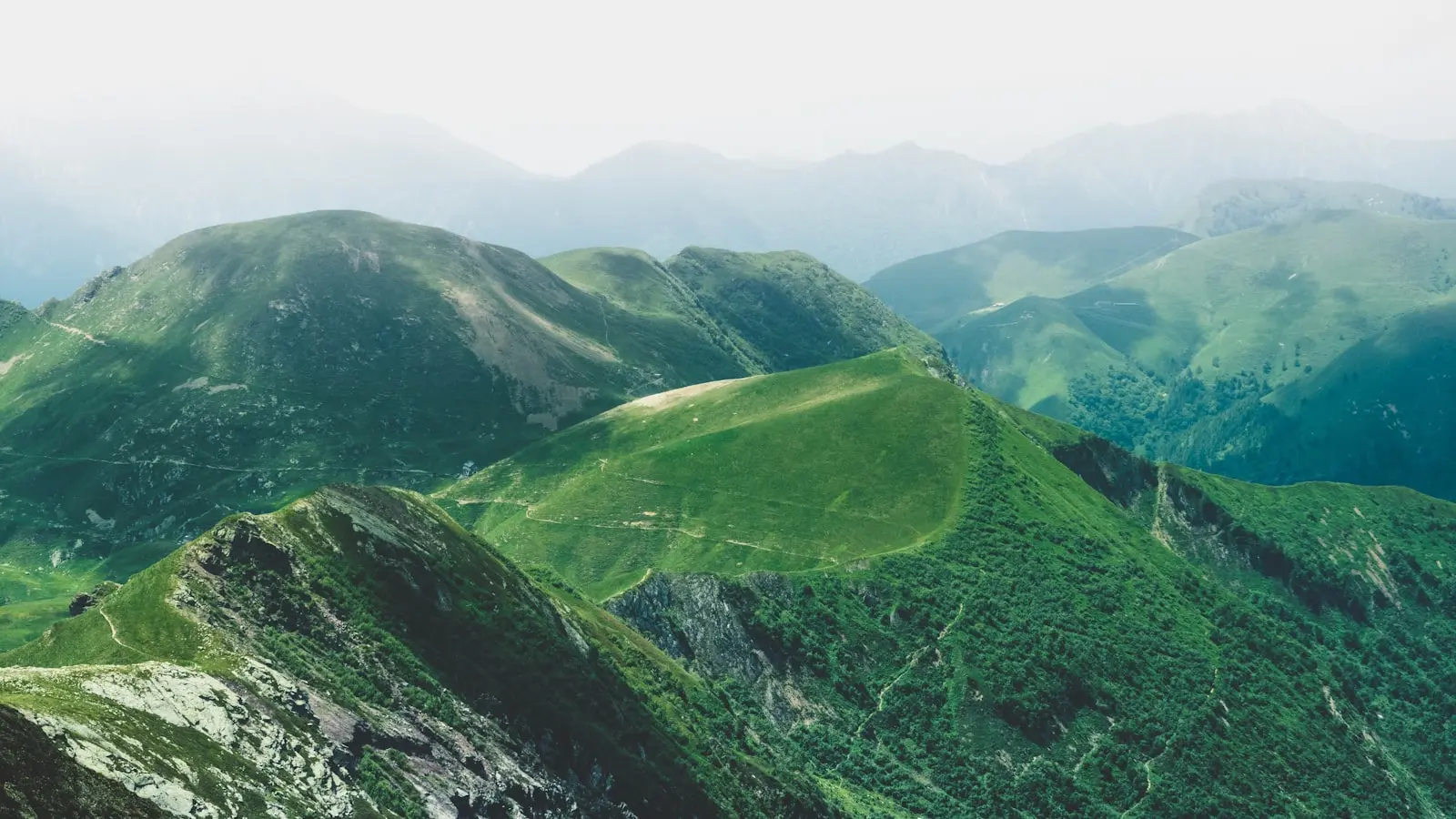
Many hikers describe a deep sense of calm after walking through intensely green scenery, such as the mossy glens of the Scottish Highlands. The question is whether that feeling is just the effect of exercise and fresh air, or if the green environment itself provides a distinct mental health boost. Research suggests the answer lies in a combination of evolutionary biology, color psychology, and measurable neurological changes.
Key Takeaways
- Hiking in vibrantly green landscapes provides mental health benefits that go beyond those from exercise alone.
- The color green itself has a calming effect on the brain, supported by evolutionary biology and color psychology research.
- Studies show that time in dense green environments lowers cortisol and alters brain activity in regions linked to depression.
- Intensely green places like Glencoe amplify these benefits through visual richness and awe-inspiring scale.
The Unique Power of Green: Why Our Brains Respond to Lush Landscapes
Human vision evolved in natural environments where green signaled food, water, and safety. Dense greenery likely meant resources and refuge from predators, so the brain learned to associate green with a restful state. This biological inheritance may explain why looking at a verdant landscape can lower heart rate and reduce stress hormones.
Color psychology studies show that green wavelengths require less effort for the human eye to process compared to reds or yellows. This reduced visual strain appears to have a calming effect on the nervous system. When hikers walk through a landscape dominated by green, the brain shifts from a vigilant state to a more relaxed one.
Compared to other natural colors, green seems to produce a stronger calming response. Blue skies or brown soil also have benefits, but the saturation and variety of green in forests and glens may trigger a deeper restorative effect. The effect is not merely aesthetic; it involves measurable changes in brain activity.
Forest Bathing vs. Regular Hiking: What the Research Shows
The Japanese practice of shinrin-yoku, or forest bathing, has been studied for decades. Research consistently shows that time in dense green environments lowers cortisol levels, improves mood, and boosts immune function. These studies typically involve participants sitting or walking slowly in a forest, emphasizing sensory immersion over vigorous exercise.
A well-known Stanford University study from 2015 compared participants who walked for 90 minutes in a natural area with those who walked in a high-traffic urban setting. The nature walkers showed decreased activity in the subgenual prefrontal cortex, a brain region linked to depression and rumination. The urban walkers did not show this change, suggesting the environment itself was a key factor.
It is important to note that forest bathing and hiking are not identical. Hiking often involves more physical exertion, which also releases endorphins and improves mood. However, controlled studies indicate that adding a green visual environment amplifies the benefits beyond what exercise alone provides. The dense, varied foliage may enhance attention restoration and reduce mental fatigue.
Case Study: Glencoe’s Vibrant Green Landscape and Mental Wellness
Glencoe in the Scottish Highlands is known for its dramatic, intensely green landscapes. Moss-covered rocks, lush grasses, and ancient woodlands create a visually immersive environment that is unusually saturated in green. This intensity may be key to its reported mental health benefits.
The area’s biodiversity means the green appears in diverse textures and shades, which may engage the visual system more fully. Research on the emotion of awe suggests that vast, beautiful landscapes can reduce inflammation and lower stress markers. Glencoe’s sweeping valleys and peaks provide ample opportunities for awe-inducing moments, which may amplify the calming effect.
While no single study has isolated Glencoe specifically, the combination of high green density, variety of hues, and grand scale is consistent with the environmental qualities that scientists link to mood improvement. Hikers there often report a lingering sense of peace that feels different from a walk in a more uniform landscape.
Addressing Skepticism: Placebo or Real Effect?
Some skeptics argue that the calm from a green hike is just placebo, or that exercise and fresh air account for all the benefits. To test this, researchers have used virtual reality experiments that show people scenes of green nature while controlling for physical activity. These studies consistently find that viewing green environments, even on a screen, reduces stress and improves mood compared to viewing urban scenes. This suggests a real, independent effect of the visual environment.
That said, the benefits are not solely from the color green. Exercise, social interaction, and fresh air all contribute. A group hike in a forest combines these factors, which may create a synergistic effect. The incremental gain from green space is modest but reliable across many studies. The current evidence supports that green environments provide added mental health value, though more longitudinal research is needed to confirm long-term effects.
Practical Tips to Maximize Mental Health Benefits on a Hike
To get the most from a hike, choose routes that offer dense, varied greenery. Mossy trails, forest canopies, and glens with multiple shades of green are ideal. Parks with uniform grass may not provide the same visual richness.
Practice mindful walking: pay attention to the colors around you, breathe deeply, and avoid using your phone. Studies suggest that 20 to 30 minutes of nature exposure can produce benefits, but 90-minute hikes show the strongest changes in brain activity. Shorter walks can still help, especially if repeated regularly.
Incorporate moments of awe. Stop at a viewpoint, a waterfall, or a section of trail where the land opens up. Allowing yourself to feel wonder may further reduce stress hormones and increase positive emotions. Hiking with a friend can also enhance safety and social connection, which adds another layer of mental health support.
Frequently Asked Questions
Does the color green itself have a psychological effect? Yes. Studies in color psychology indicate that green is perceived as restful and can reduce anxiety independently of exercise or fresh air. The effect is likely rooted in evolutionary associations with safe, resource-rich environments.
How does a hike in a place like Glencoe differ from a walk in a local park? The intensity, diversity, and scale of green in dramatic landscapes like Glencoe evoke awe and deeper immersion. This can amplify the mental health benefits beyond what a typical local park offers, due to the visual richness and the emotional response to grand natural scenes.
Is the mental health benefit of hiking in green spaces just from exercise? No. Controlled studies consistently show that green environments provide extra mood and cognitive gains beyond those from exercise alone. Virtual reality experiments isolating visual input confirm that green scenes reduce stress markers even when physical activity is held constant.