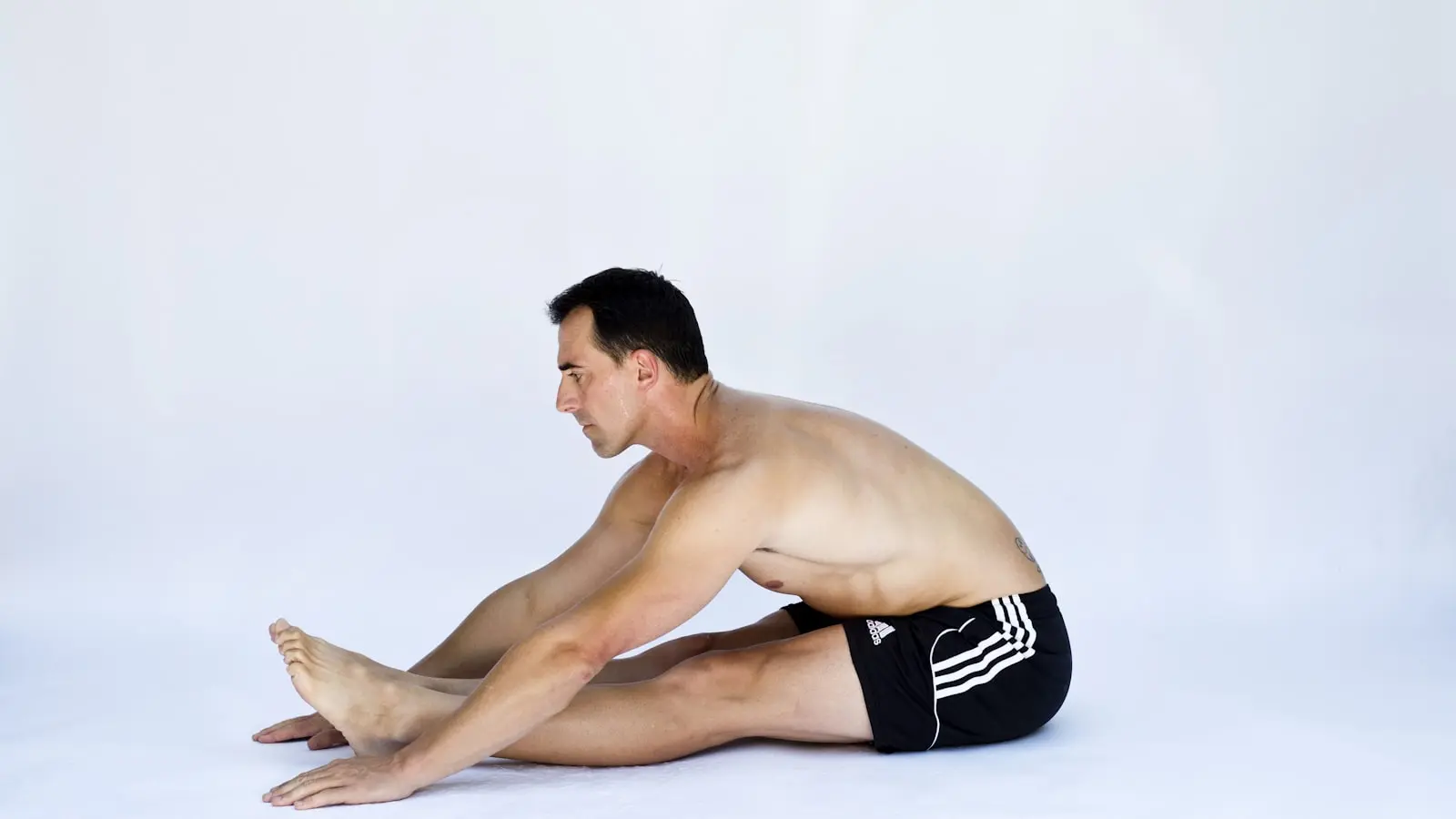
Hamstring strains occur when the muscles at the back of the thigh are stretched beyond capacity or loaded suddenly during high-speed movements like sprinting. The primary mechanism is eccentric overload during the late swing phase of running, when the hamstring lengthens under high force to decelerate the leg. Effective prevention requires targeted eccentric strengthening, glute and core conditioning, and dynamic warm-ups — not just stretching. This article breaks down the causes and lays out a concrete prevention and rehabilitation roadmap.
Key Takeaways
- The primary cause of hamstring strains is eccentric overload during the late swing phase of sprinting, not simply tightness.
- Eccentric strengthening — especially Nordic hamstring curls — is the most effective prevention strategy supported by research.
- Weak glutes and core increase hamstring strain risk; targeted strengthening of these areas is essential.
- Dynamic warm-ups with movement prep reduce injury risk more than static stretching alone.
- Rehabilitation should follow a staged, criteria-based approach to avoid re-injury.
Anatomy of a Hamstring Strain: Why the Biceps Femoris Is Most Vulnerable
The hamstring group consists of three muscles: biceps femoris, semitendinosus, and semimembranosus. The biceps femoris is the most frequently strained, particularly its long head. This muscle is responsible for both hip extension and knee flexion, and it undergoes the greatest length change during sprinting. Strains are graded by severity: Grade I involves minor tearing with mild pain and no significant strength loss; Grade II is a partial tear with noticeable weakness; Grade III is a complete rupture often requiring surgical repair. Understanding which muscle is injured and the grade helps guide recovery timelines and rehab priorities.
The Real Cause: Eccentric Overload and Poor Neuromuscular Control
Many athletes believe that tight hamstrings are the main culprit. While flexibility deficits can contribute, the real cause lies in eccentric overload during the late swing phase of sprinting. As the leg swings forward, the hamstring must lengthen rapidly while contracting to decelerate the limb. This combination of high force and elongation places extreme stress on the muscle-tendon unit. When the muscle is fatigued, weak at long lengths, or lacks proper neural activation, the tissue fails. Tightness is often a compensatory response to underlying weakness rather than the root problem. Research consistently shows that neuromuscular control and strength at extended ranges are more protective than flexibility alone.
Evidence-Based Prevention: Eccentric Strengthening and Nordic Hamstring Curls
Eccentric exercises — where the muscle lengthens under tension — are the cornerstone of hamstring injury prevention. The Nordic hamstring curl is the most widely studied exercise. Research conducted at Stanford University, among other institutions, has shown that a nine-week Nordic training program induces structural adaptations in the hamstring muscles, likely increasing their capacity to withstand eccentric loads. Other effective exercises include Romanian deadlifts, slide lunges, and single-leg hip lifts with an eccentric focus. A typical prevention program should include two to three sessions per week, with gradual progression in volume and intensity. These exercises should be integrated into regular training cycles, not performed only when already injured.
The Role of Glute and Core Strength in Injury Reduction
Weak glutes force the hamstrings to work harder during running and jumping, increasing strain risk. The gluteus maximus is the primary hip extensor; when it underperforms, the hamstrings take on excessive load. Similarly, core instability reduces pelvic control, altering the length-tension relationship of the hamstrings during movement. A well-designed prevention program should include exercises such as glute bridges (double and single leg), single-leg deadlifts, planks, side planks, and side-lying clamshells. Strengthening these muscle groups helps distribute force more evenly and maintains proper pelvic alignment during high-speed activities.
Warm-Up and Movement Prep for Runners and Soccer Players
A proper warm-up prepares the neuromuscular system for the demands of sprinting. Static stretching alone does not reduce injury risk and may even temporarily impair performance. Instead, dynamic warm-ups that activate the hamstrings, glutes, and core are recommended. Effective drills include walking lunges, high knees, butt kicks, straight-leg marches, and A-skips. Adding brief isometric holds or light eccentric loading before high-speed work can further enhance readiness. For example, performing a few controlled single-leg Romanian deadlifts or short Nordic curl eccentrics can pre-activate the hamstrings. The entire warm-up should last 10 to 15 minutes and progressively increase in intensity.
Rehabilitation Stages: From Acute Care to Return-to-Play
Rehabilitation after a hamstring strain should follow a staged approach, with progression based on specific criteria rather than time alone.
Stage 1 (acute) focuses on pain management, gentle range of motion, and isometric loading to maintain muscle activation without stretching the injured tissue. Walking and pain-free movement are encouraged. Stage 2 (sub-acute) introduces eccentric loading and neuromuscular control exercises, such as supine hamstring curls with slow lowering and single-leg balance work. Stage 3 (strength phase) incorporates progressive resistance training with exercises like Romanian deadlifts, Nordic curls, and glute bridges, gradually increasing load and range of motion. Stage 4 (return-to-play) involves sport-specific movements: gradual reintroduction to sprinting, agility drills, and plyometrics. Return-to-play criteria include full pain-free range of motion, strength within at least 90 percent of the uninjured side, and successful completion of high-speed drills without compensation.
Warning signs during rehab include persistent pain, loss of range of motion, asymmetry in strength or flexibility, and any feeling of giving way. If these occur, it is wise to consult a sports medicine professional.
Frequently Asked Questions
1. Can stretching alone prevent hamstring strains?
No. While maintaining flexibility can be part of a balanced program, stretching alone does not address the underlying weakness and poor neuromuscular control that cause most strains. Evidence consistently shows that eccentric strengthening is far more effective for prevention.
2. How long does it take to recover from a hamstring strain?
Recovery depends on the grade of injury and individual factors. Grade I strains often allow return to activity in one to two weeks. Grade II strains typically require four to eight weeks. Grade III tears, especially complete ruptures, may require surgery and several months of rehabilitation. Adherence to a structured rehab program is key.
3. When can I return to sprinting after a hamstring injury?
Return-to-play should be guided by objective criteria: full pain-free range of motion, strength near 90 percent of the uninjured leg, and successful completion of sport-specific drills at full speed without limping or hesitation. Rushing back before meeting these benchmarks significantly raises the risk of re-injury.