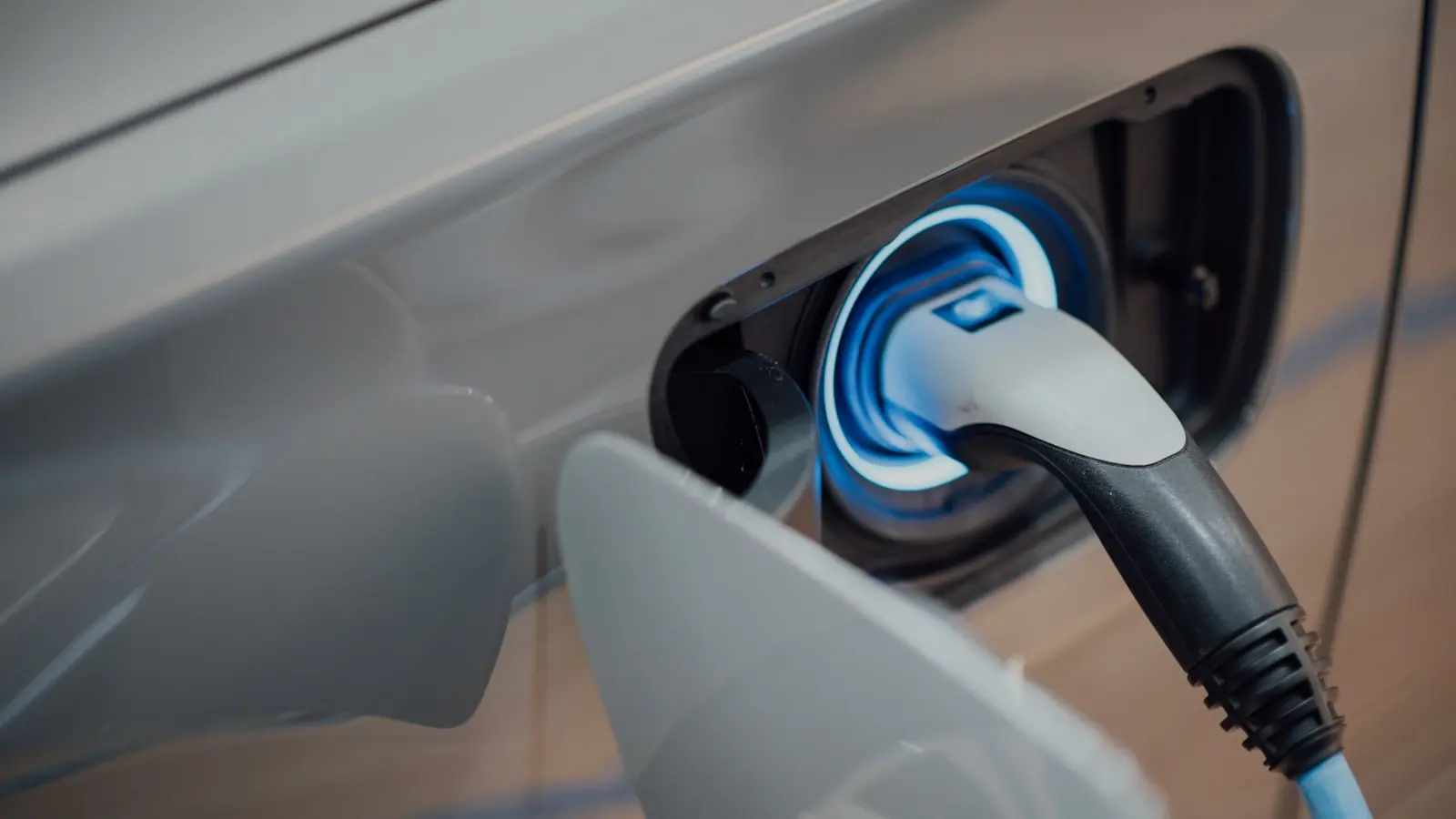

Group14 Technologies has commissioned a factory to produce silicon carbon battery materials, a component intended to enable electric vehicles to recharge to 80% capacity in under 15 minutes. The facility represents a critical transition from laboratory-scale chemistry to industrial-scale production for a technology that directly targets the most significant points of friction in EV adoption: charge time and range anxiety. The company’s material is engineered to replace the conventional graphite anodes used in nearly all contemporary lithium-ion batteries.
The strategic objective is clear. By enabling what the industry terms “flash charging,” the operational dynamic of an EV could be fundamentally altered to mirror the convenience of a gasoline refueling station. This shift is widely considered a prerequisite for moving EVs from the early adopter market to comprehensive mainstream acceptance. The core of Group14’s value proposition lies in its patented method for harnessing the potential of silicon, a material long understood to be theoretically superior to graphite but practically unstable.
Automakers have expressed significant interest in integrating such technologies into vehicle models slated for the 2027-2028 production cycle, signaling that the pressure to solve the fast-charging puzzle is immense. Yet, the path from a factory opening to mass-market deployment is paved with significant engineering, logistical, and economic challenges. The announcement is a milestone, but the ultimate verdict will be rendered not by press releases, but by performance metrics and production volumes.
A Technical Breakdown of Anode Chemistry
To understand the significance of this development, one must first understand the function of an anode within a lithium-ion cell. During charging, the anode acts as the host, absorbing and storing lithium ions that travel from the cathode. During discharge, it releases them. For decades, graphite has been the material of choice for this role. It is stable, conductive, and cost-effective. Its primary limitation, however, is its capacity. A graphite anode has a theoretical maximum specific capacity of 372 milliamp-hours per gram (mAh/g).
Silicon, by contrast, possesses a theoretical capacity nearly ten times higher, at over 3,500 mAh/g. This enormous potential means a silicon-based anode can store significantly more lithium ions in the same amount of space, leading to a direct increase in a battery’s energy density. Higher energy density translates into two possible outcomes for an EV: a much longer range from a battery of the same physical size, or the same range from a much smaller, lighter, and potentially cheaper battery pack.
The historical barrier to using silicon has been its catastrophic physical instability. As a silicon anode absorbs lithium ions, it swells to more than three times its original volume. This massive expansion and subsequent contraction during each charge-discharge cycle physically pulverizes the anode material. The result is a rapid loss of electrical contact within the electrode, a swift decline in capacity, and ultimately, a dead battery after just a handful of cycles. (Frankly, early attempts were disastrous).
Group14’s central claim is that its patented silicon-carbon composite material has solved this expansion problem. While the precise formulation is proprietary, the general approach in the industry involves creating a porous, scaffold-like structure. In this model, nano-sized silicon particles are embedded within a stable but flexible carbon matrix. The carbon serves multiple functions: it provides a highly conductive pathway for electrons and it creates engineered voids that give the silicon particles room to expand and contract without destroying the anode’s overall structural integrity. The challenge is manufacturing this complex microscopic architecture with perfect uniformity at an industrial scale.
Real-World Implications Beyond the Spec Sheet
The promise of a sub-15-minute charge time fundamentally re-calibrates the user experience of an electric vehicle. Current DC fast-charging technology, under ideal conditions, can typically bring a battery to 80% in 30 to 45 minutes. This is a workable but inconvenient pause for long-distance travel. A driver must actively plan routes around charging infrastructure and accommodate significant downtime. It works. It is not seamless.
A flash-charging capability removes this planning overhead. The psychological barrier of range anxiety diminishes when a driver knows that a 10-minute stop can add hundreds of miles of range. This convenience is crucial for commercial fleet operators, ride-sharing services, and any consumer who cannot install a Level 2 charger at their residence. It makes the EV a more direct and versatile replacement for an internal combustion engine vehicle.
To achieve this, several key performance metrics must be met simultaneously:
-
High C-Rate Acceptance: C-rate measures the speed at which a battery is charged or discharged relative to its maximum capacity. A 1C rate charges a battery in one hour. Flash charging requires sustained acceptance of C-rates of 4C or higher. The anode material must be able to absorb lithium ions at this incredible speed without plating, a phenomenon where lithium metal deposits on the anode surface, permanently reducing capacity and creating a safety risk.
-
Cycle Life Under Stress: A fast charge is a stressful event for a battery. The anode material must be able to withstand thousands of these high-stress charging cycles without significant degradation. An automaker will not adopt a technology that delivers impressive day-one performance only to have the battery’s capacity fade unacceptably after a few years of use. Longevity is non-negotiable.
-
Thermal Stability: Pushing a massive amount of current into a battery generates a tremendous amount of heat. The anode material, the cell design, and the vehicle’s battery management system must all work in concert to manage this thermal load effectively. Failure to do so can accelerate battery degradation or, in a worst-case scenario, trigger thermal runaway.
The Crowded and Expensive Competitive Landscape
Group14 is not operating in a vacuum. The race to commercialize a stable, high-capacity silicon anode is one of the most intensely competitive and well-funded arenas in the battery technology space. Several key players are pursuing similar goals, each with a different technical approach and strategic partnerships.
Sila Nanotechnologies, which has a supply agreement with Mercedes-Benz for its G-Wagon EV, uses a different proprietary silicon composite. Enovix has focused on a unique 3D cell architecture that uses a 100% silicon anode, constrained by a stainless steel substrate to manage expansion. Beyond these specialized startups, the established battery giants—CATL, LG Energy Solution, Samsung SDI, and Panasonic—are all investing heavily in their own silicon-based anode research. These incumbents possess a formidable advantage in manufacturing scale and existing relationships with global automakers. (They can afford to lose on a few research tracks).
The primary challenge for any newcomer is scaling production. A pilot plant that produces a few kilograms of material is an entirely different enterprise from a factory that must reliably produce thousands of tons of automotive-grade material per year. The supply chains for precursor materials, like silane gas and specialized carbons, must be established and secured. The capital expenditure required to build these facilities runs into the hundreds of millions, if not billions, of dollars. Group14’s factory opening is a significant step, but it places them at the starting line of a marathon, not the finish.
From the Factory Floor to the Highway
Announcing a factory is a public relations victory. Operating it to the exacting standards of the automotive industry is an entirely different class of problem. The transition from lab to gigafactory introduces several brutal realities.
First is cost. The optimized supply chain for battery-grade graphite has made it an exceptionally cheap material. Any new anode material, no matter how performant, must compete on a cost-per-kilowatt-hour ($/kWh) basis. Group14’s silicon-carbon composite is inherently a more complex and likely more expensive material to synthesize. The company must demonstrate a clear and aggressive roadmap for driving down production costs as it scales volume. Without a path to cost parity, or near-parity, its material risks being relegated to niche, high-performance applications rather than the mass-market vehicles where it could have the greatest impact.
Second is quality control. Battery manufacturing demands almost supernatural levels of purity and uniformity. A single microscopic impurity in the anode material can become the seed for dendrite growth, leading to an internal short circuit and cell failure. The production process must be monitored and controlled with extreme precision, batch after batch, ton after ton. Any deviation in the porosity of the carbon scaffold or the size distribution of the silicon nanoparticles could compromise performance and safety.
Finally, there is the challenge of integration. A new anode material cannot simply be swapped into an existing battery manufacturing line. It requires battery makers to adjust everything from the slurry mixing process and electrode coating thickness to the specific protocols for cell formation and aging. This requires close collaboration and extensive validation testing. Battery manufacturers are inherently conservative; they will not re-tool a multi-billion dollar production line without overwhelming proof that the new material is reliable, safe, and manufacturable at scale. The burden of proof rests entirely on Group14.
In conclusion, Group14’s factory represents tangible progress in the quest for a better battery. The underlying technology directly addresses the most significant weaknesses of current EV technology. The potential for disruption is real. However, the ultimate success of this venture now moves from the realm of materials science to the unforgiving domains of industrial engineering, supply chain logistics, and ruthless cost optimization. The industry will be watching not for the next announcement, but for the first vehicle that uses this technology to deliver a verified, repeatable, sub-15-minute charge. That is the only benchmark that matters.