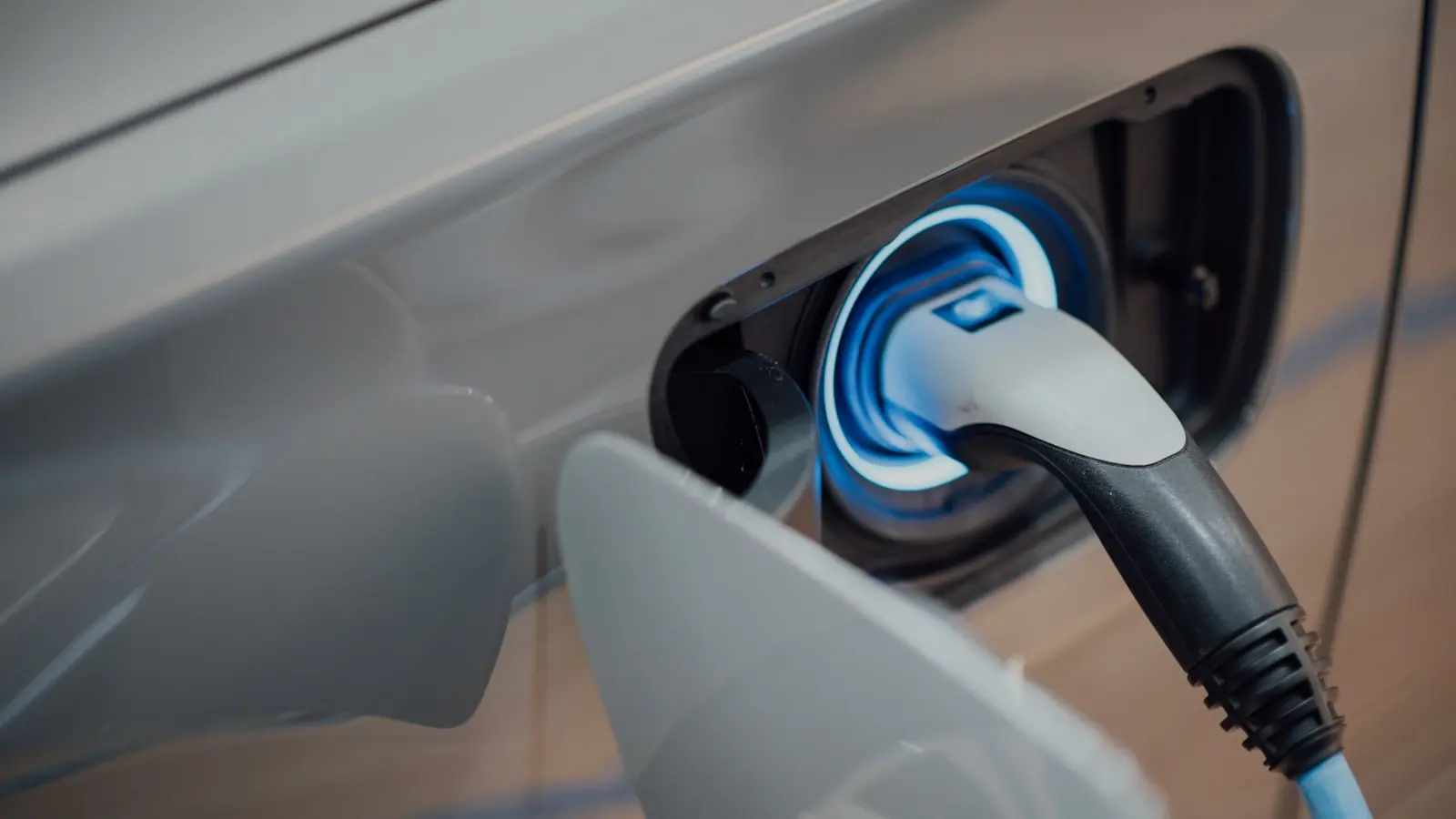

A factory in Washington state has begun producing a material designed to dismantle the single greatest barrier to electric vehicle adoption. Group14 Technologies has operationalized its facility to manufacture SCC55, a silicon-carbon composite anode material that promises to enable EVs to gain over 200 miles of range in under 10 minutes. The company calls it ‘flash charging,’ a term that attempts to re-anchor the refueling experience from an overnight chore to a brief stop.
The core of the problem has always been the anode. For decades, lithium-ion batteries have relied on graphite to house lithium ions during charging. This material is stable and cost-effective, but it has a physical speed limit for how quickly it can absorb ions without degrading or causing dangerous lithium plating. This limitation is the primary reason EV charging takes substantially longer than filling a tank with gasoline. Group14, alongside competitors, is betting that silicon is the successor to graphite, capable of storing up to ten times more lithium ions by weight.
This shift from a proven commodity like graphite to a high-performance composite is not merely an incremental upgrade; it represents a fundamental change in battery chemistry and manufacturing. The primary historical obstacle for silicon anodes has been their tendency to swell and crack during charge and discharge cycles, catastrophically reducing battery life. Group14 claims its proprietary process, which creates a carbon scaffold to contain the silicon, has solved this stability issue, turning a laboratory concept into a manufacturable product. The stakes are immense. Success means rendering range anxiety obsolete.
The Technical Mechanism of SCC55
The SCC55 material operates on a simple principle with complex execution. Instead of pure silicon powder, which is dimensionally unstable, Group14 creates a porous, carbon-based structure. Silicon is then deposited within this scaffold. As the battery charges, lithium ions move to the anode and are stored by the silicon. The carbon framework provides two critical functions: it acts as a flexible container, accommodating the silicon’s natural expansion and contraction, and it maintains electrical conductivity throughout the anode structure, even after thousands of cycles.
This architecture directly addresses the failure points of previous silicon-based attempts. The result is an anode that can accept a massive influx of ions at high speed without the physical degradation that plagues less sophisticated designs. The ‘flash charge’ capability is a direct consequence of this structural integrity. A battery equipped with an SCC55 anode can handle higher C-rates (a measure of charging speed relative to battery capacity) without overheating or sustaining damage.
The implications extend beyond raw speed. A higher energy density means that for a given battery weight and volume, a car can store more energy. This gives manufacturers a critical choice:
- Extend Range: Keep the battery pack the same size as a current-generation pack and offer significantly longer driving range.
- Reduce Weight & Cost: Offer the same range as today’s EVs but with a much smaller, lighter, and potentially cheaper battery pack. A lighter vehicle is more efficient, creating a virtuous cycle of performance gains.
Group14’s CEO, Rick Luebbe, has pointed to a future where charging becomes an afterthought, enabled by concepts like inductive charging at stoplights. While inductive technology itself is not new, its practicality has been hampered by slow energy transfer rates. A battery that can absorb energy almost instantaneously makes these ‘opportunity charging’ scenarios viable. A few seconds at an intersection could translate to several miles of range. You wouldn’t think about charging again.
Market Validation and Supply Chain Realities
Silicon anode technology has attracted significant investment, but Group14’s progress is notable for its list of strategic partners. The involvement of Porsche’s battery division, Cellforce Group, provides a clear signal of market intent. Automakers, particularly in the premium and performance sectors, are the ideal entry point for this technology. Their customers are more willing to pay a premium for tangible performance benefits like drastically reduced charging times, and the production volumes are more manageable for a new factory.
Partnerships with established cell manufacturers like StoreDot and Molicel are equally crucial. Group14 is not trying to build entire batteries; it is a materials science company focused on producing a key component. Its success depends on its ability to integrate SCC55 into existing battery manufacturing lines as a ‘drop-in’ replacement for graphite. This strategy reduces the barrier to adoption for cell makers, who are heavily invested in their current production infrastructure. (Frankly, a necessary move to avoid fighting a war on two fronts).
The new factory’s stated annual capacity is enough material for approximately 50,000 to 100,000 EV batteries. To put this in perspective, major automakers produce millions of EVs per year. Group14’s initial output is a drop in the ocean. This is not a failure of ambition but a reflection of the methodical process of scaling new manufacturing techniques. The first wave of vehicles equipped with this technology will be high-end, limited-run models. The central challenge moving forward will be reducing the cost per kilogram of SCC55 to a point where it can compete with synthetic graphite in mass-market vehicles.
The Competitive Landscape
Group14 is not operating in a vacuum. The race to commercialize silicon anodes is intense, with several well-funded competitors making significant strides.
-
SILA Nanotechnologies: Another major player, SILA has a partnership with Mercedes-Benz and its material is set to feature in the electric G-Class. Their technology also focuses on a composite structure to manage silicon swelling, and they are similarly focused on scaling production from an existing facility.
-
Enovix: This company takes a different architectural approach, using a 3D cell architecture with a 100% active silicon anode. They claim this design further increases energy density and resists swelling, but it may require more significant changes to existing battery manufacturing processes.
This competition is a powerful validation of the technology’s potential. The question is no longer if silicon anodes will replace graphite, but who will perfect the manufacturing process and secure the supply chain first. Each company’s proprietary method for stabilizing silicon will be the ultimate determinant of cost, performance, and long-term durability—the key metrics that dictate automotive supply contracts.
The transition is underway. While graphite will remain the dominant anode material for budget and commercial vehicles for years to come, the performance segment is now a battleground for advanced materials. Group14’s factory opening marks a critical milestone, moving silicon-carbon anodes from the laboratory to the assembly line. The promise of a ten-minute charge is now a question of industrial scale, not scientific feasibility. The execution is everything.