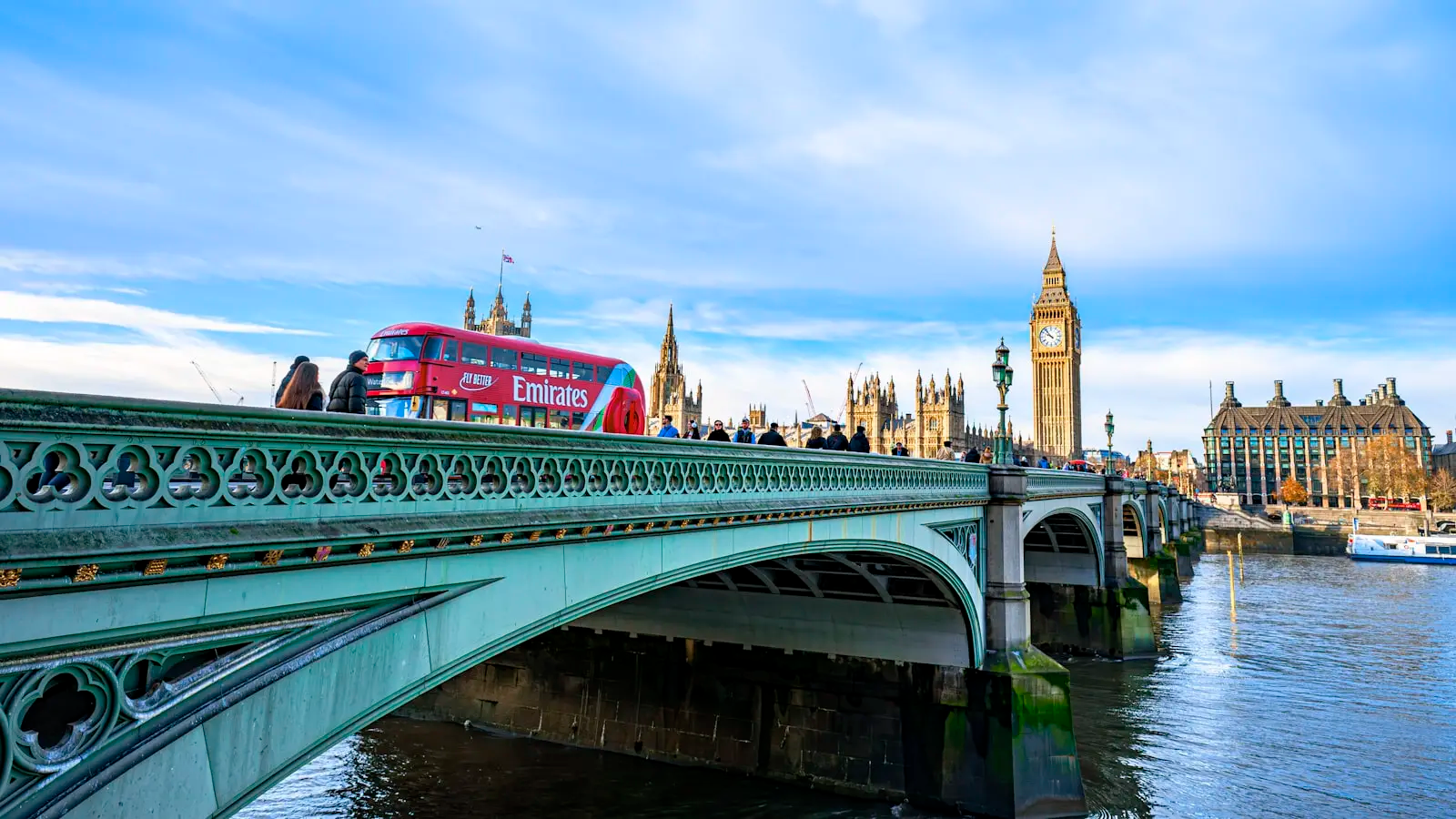

Global tourism metrics confirm London dominates the short-duration travel sector, driven largely by an unparalleled concentration of walkable heritage sites layered against high-speed transit networks. The post-pandemic surge in city-break travel brought intense scrutiny to metropolitan hubs across Europe, yet the British capital consistently absorbs the volume. Inflation applies upward pressure on travel costs across the continent, straining hospitality budgets. Visitors absorb these premiums because London delivers a sheer density of experience per square mile that few metropolitan centers match. The equation balances.
Analysts track this resilience back to spatial design. A five-day itinerary in London requires rigorous spatial and emotional calculation. Travelers arrive through major transit arteries, spilling out into streets where centuries of architectural philosophies collide. Urban planners and travel journalists observe a psychological energy unique to this specific capital. Time operates differently when geography compresses history into dense, walkable grids. The modern creative industries do not merely exist alongside ancient foundations; they occupy them. (The architectural friction feels deliberate).
When commuters watch the Thames rush past the concrete pylons of the South Bank against a backdrop of glass financial towers, the visual narrative shifts. The city operates as the most accessible global transit hub, filtering international wealth and aesthetic preferences through a distinctly British sieve. Enough foot traffic passes through Waterloo Station daily to populate a mid-sized sovereign nation. They disperse into a city that refuses to segregate its eras.
Spatial Friction and the Geographic Gauntlet
Navigating London over five days forces strict curatorial choices upon the visitor. The geographic spread of the city demands mastery of the subterranean transit network. The Elizabeth Line slices through the clay beneath the city, cutting transit times and reshaping how visitors perceive urban distance. Neighborhoods previously isolated by complex bus routes now open their hospitality sectors to international volume. The isolation fractures.
Step out of the brutalist concrete cavern of the Barbican Centre onto the slick, rain-paved streets of the City, and the centuries collide. Glass skyscrapers cast sharp shadows over medieval stone guilds. Rainwater pools in grooves worn into stone steps by centuries of boot heels. The air smells of roasted coffee and damp exhaust. Navigating this terrain requires shifting between the expansive luxury of Mayfair and the dense, vertical claustrophobia of the original Roman walls.
Urban planners emphasize that London seamlessly integrates deep history with modern creative industries. This integration manifests physically. Restaurants claiming high Michelin ratings operate inside former banking halls. Retail flagships strip back plaster to expose Victorian brickwork. The built environment dictates the social behavior within it. Patrons lower their voices under vaulted stone ceilings. They move faster across modern steel bridges. Space commands the body.
Institutional Weight and the Museum Economy
A five-day schedule inevitably circles the major cultural institutions. The British Museum and the Tate Modern operate as gravitational centers for international itineraries. These spaces do not merely house artifacts; they dictate the rhythm of the surrounding neighborhoods.
The Tate Modern occupies the shell of the former Bankside Power Station. The Turbine Hall swallows sound. Patrons move through immense industrial voids before entering compressed, curated galleries. The architecture reduces the individual to scale before presenting contemporary art. (Can contemporary culture truly breathe under this much brick?) The building forces visitors to confront industrial history before engaging with modern abstraction. It creates a physical transition zone.
Across the city, the British Museum presents a different architectural argument. The Great Court wraps neoclassical stone in a modern glass canopy. Light fractures across the limestone floor. Visitors traverse continents within steps, moving from Egyptian granodiorite to Greek marble. The sheer volume of material wealth gathered under one roof alters the psychological state of the observer. Fatigue sets in quickly. Institutional exhaustion is a recognized metric among travel analysts calculating daily itinerary limits. The mind reaches capacity.
Museum directors face an ongoing battle for attention spans. The curation of physical artifacts now competes with digital immediacy. Walk through the Victoria and Albert Museum. The layout forces visitors to slow down, to engage with the tactile reality of textiles and metalwork spanning millennia. The physical space disrupts the digital habit. Lighting falls across a wrought-iron gate, highlighting craftsmanship that machines cannot replicate. The eye adjusts to the analog. (Digital replication holds no weight here).
The Shift in Social Energy
Heritage anchors the morning; modern hospitality dictates the evening. The transition from institutional observation to social participation defines the success of a five-day stay. Districts like Soho and Shoreditch offer contrasting case studies in how urban spaces generate social energy.
Soho maintains a frenetic, tightly packed street level. The district retains a residual chaos from its history as a center for underground media and entertainment. Narrow streets compress crowds. Pubs spill onto the pavement. The architectural density prevents rapid movement, forcing proximity. Diners sit shoulder-to-shoulder in basement restaurants where acoustic treatments fail to dampen the noise. The tension vibrates. (Frankly, the noise level borders on hostile).
Shoreditch operates on a different frequency. The post-industrial landscape of East London provides larger spatial canvases for the creative industries. Former warehouses host multi-level dining concepts and private member clubs. The streets are wider, the buildings lower, yet the social atmosphere feels equally engineered. Hospitality groups pour capital into interior design, recognizing that aesthetic environments command premium pricing. Exposed ductwork, raw steel, and curated lighting schemes signal modern luxury as effectively as brass and velvet did a century ago. Taste evolves.
The Economics of Density
The travel sector watches London closely because it functions as an economic sandbox for global tourism trends. Inflation impacts every layer of the travel experience. Hotel daily rates climb. Dining requires substantial liquidity. Transit fares increase. Yet the demand curve remains stubbornly inelastic.
Travel journalists highlight this cost-to-experience ratio. A five-day trip to London costs significantly more than a comparable duration in regional European cities. Travelers pay the premium because the density of experience mitigates the cost. The city concentrates world-class retail, dining, and cultural heritage within a tight geographic radius. The efficiency of the experience justifies the expenditure. Time holds more value than capital.
To understand the scale of this economic engine, one must look at the infrastructure supporting it. The hospitality sector alone employs enough workers to populate a secondary city. Supply chains stretching across agricultural borders funnel raw materials into the kitchens of Mayfair and Shoreditch daily. When a tourist purchases a set menu in a high-end Soho establishment, they finance a vast, invisible network of logistics. The plate on the table represents a complex arbitrage of labor, real estate, and agricultural output. The cost of a hotel room reflects not just the bed, but the premium placed on geographic proximity to power and history. Market forces punish inefficiency.
Industry data tracks this behavioral shift. Tourists no longer seek passive relaxation in metropolitan environments; they seek intense, curated immersion. They want to consume the culture, the architecture, and the social energy in concentrated bursts. London facilitates this consumption by removing friction between experiences. A visitor can view a Picasso, walk across a pedestrian bridge, and consume a globally recognized culinary concept within an hour. The velocity is unmatched.
Design Shapes Behavior
Ultimately, London retains its position at the apex of global tourism metrics because it continuously remodels its core identity while preserving its foundations. The city does not rely solely on its heritage; it leverages that heritage to elevate modern additions.
When engineers design modern transit systems that empty directly into medieval courtyards, they manipulate the human experience of time. When hospitality groups strip industrial spaces to build high-energy social hubs, they engineer atmosphere. The average tourist might not recognize the specific architectural interventions that shape their five-day itinerary, but they feel the resulting psychological energy. They return to their home countries carrying the residue of a city that refuses to stand still. Culture dictates the demand. Design dictates the delivery. London masters both.