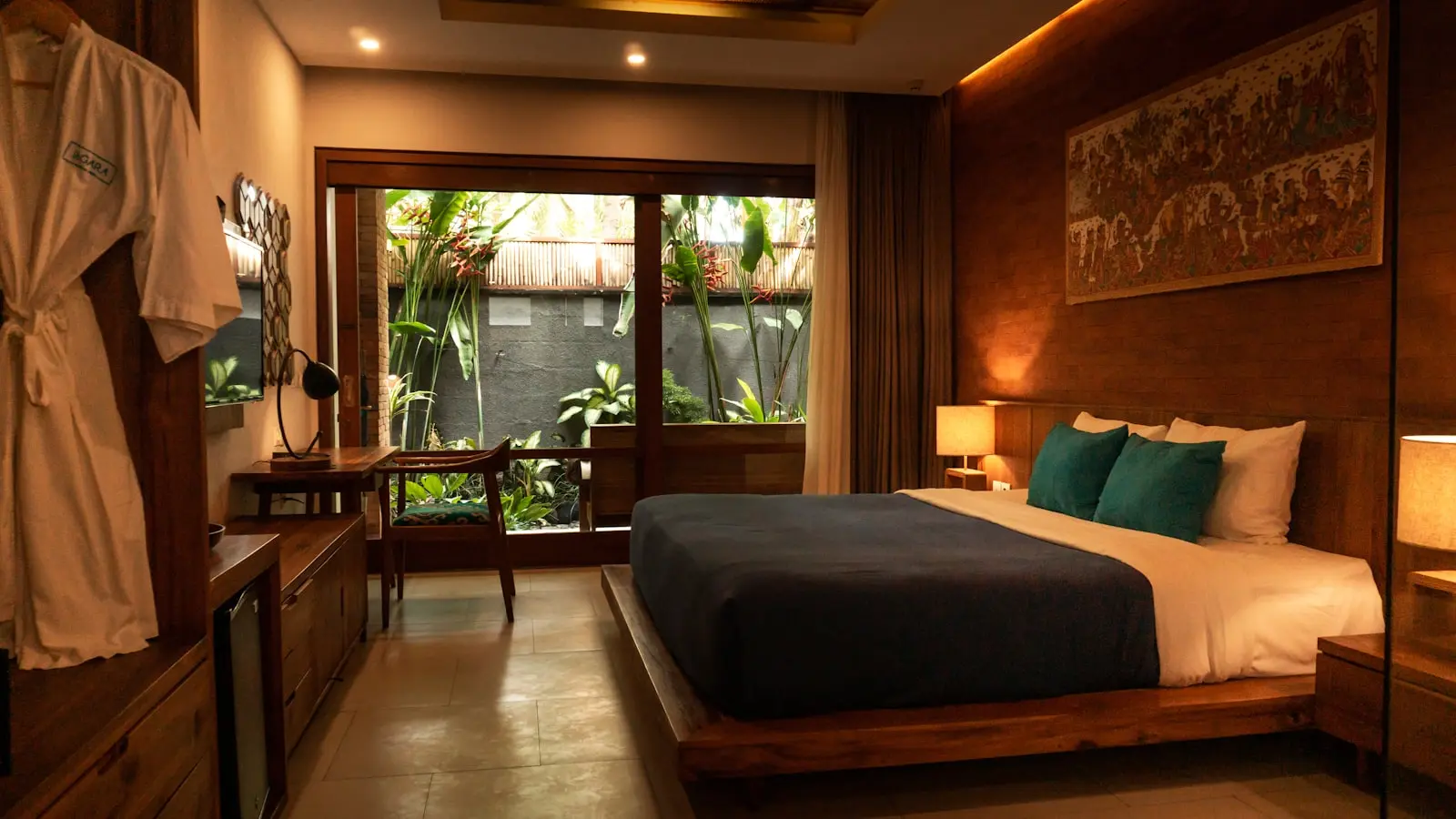
The Core Problem: When the Hotel Clock Dictates Your Sleep Cycle
A traveler books a hotel room expecting a restful night. The check-in is at 3pm, the checkout at 8am. That leaves, at best, 17 hours of room occupancy — but only five to six of those hours are typically used for sleep if one wishes to wake naturally. Reddit community discussions have erupted over this exact scenario. Users describe waking up to a phone alarm at 6am to shower, pack, and vacate by 8am, often after a late arrival the night before. The result is a truncated sleep window that violates basic sleep hygiene principles.
The frustration is not merely subjective. Sleep research consistently shows that abrupt early waking, especially when it cuts short the final REM cycles, induces a state known as sleep inertia. This is a period of grogginess, impaired cognitive function, and reduced motor coordination that can last 30 minutes to several hours. For travelers facing early flights or meetings, this is not an inconvenience; it is a performance liability.
The Sleep Science Behind the Complaint
The human sleep architecture is not a single block. It consists of several 90-minute cycles that transition through light sleep, deep slow-wave sleep, and REM sleep. The final cycles of the night, particularly the last two hours, are disproportionately rich in REM sleep, which is critical for emotional regulation and memory consolidation. Forcing a wake-up before these cycles complete can leave the brain in a state of partial arousal. The amygdala and prefrontal cortex struggle to synchronize, leading to irritability and poor decision-making.
Circadian rhythm disruption adds another layer. The body’s internal clock is entrained to the light-dark cycle. When a traveler crosses time zones, the clock drifts. But even without time zone travel, forcing an early wake-up that is misaligned with the individual’s chronotype — morning lark versus night owl — imposes a social jet lag. Research from the National Sleep Foundation indicates that even a single night of insufficient sleep can impair alertness equivalent to a blood alcohol concentration of 0.05%. An 8am checkout often necessitates waking by 6:30am or earlier, which for many adults is outside their natural sleep window.
The Hotel Industry’s Perspective: Turnover and Revenue
Hotels defend early checkout times through operational logic. Housekeeping teams need time to clean rooms before the standard 3pm check-in. A late checkout request, often charged at half a day’s rate, disrupts the cleaning schedule and reduces room availability for incoming guests. Revenue management systems treat each hour as a potential sellable unit. In principle, a shorter occupancy gap means higher revenue per available room.
But the cost side of this equation is often ignored in the financial models. Guest satisfaction scores — and, critically, repeat booking rates — are sensitive to perceived unfairness. When a traveler feels that the hotel prioritizes cleaning schedules over their well-being, the emotional response can be negative. In the Reddit threads, users explicitly state they avoid chains known for rigid 8am checkout policies. One user wrote, “It feels like a money grab.” (Is it fair? The evidence suggests hotels could adjust without losing much turnover time. Many properties already offer express checkout by phone or app, leaving the room key behind. Yet the physical room still needs cleaning.)
The Evidence: What Sleep Studies Show
No direct study has measured the impact of hotel checkout times on sleep architecture. However, the broader literature on sleep restriction and forced awakening is robust. A 2018 meta-analysis in Sleep Medicine Reviews concluded that forced early awakening leads to significant increases in sleep inertia symptoms for at least 45 minutes post-awakening. Another study from the Journal of Clinical Sleep Medicine found that individuals who woke up two hours earlier than their habitual time showed reduced performance on reaction time tests equivalent to a night of total sleep deprivation. For travelers, this is not just theoretical. If your flight departs at 9am and you need to be at the airport by 7am, that 8am checkout forces you to start your day even earlier, compounding the sleep loss.
The hotel industry’s response is often to offer a late checkout as a loyalty perk or for a fee. But the baseline assumption should not be that the standard policy is healthy. Sleep experts advocate for a checkout time no earlier than 11am to allow a full 7-8 hours of sleep for the majority of guests who check in at 3pm. This is not radical. Many boutique hotels and international chains already offer 12pm or even 1pm checkout as standard. The differentiation suggests that the 8am policy is a choice, not a necessity.
Practical Guidance for Travelers
Travelers are not helpless. Several evidence-backed strategies can mitigate the damage of an early checkout.
- Before booking: Verify the checkout time. If it is earlier than 10am, ask if a late checkout is available — often at check-in or by email. Many hotels will accommodate a 12pm checkout if requested politely and if the room is available.
- Adjust your sleep schedule: If you know you have to be up by 5am, try to go to bed earlier, even by an hour. This is not always possible with late flights, but the principle of extending total time in bed can reduce the deficit.
- Use bright light exposure immediately upon waking: Light signals the suprachiasmatic nucleus to suppress melatonin and shift the circadian clock forward. A portable light therapy device or simply opening curtains can help.
- Leverage loyalty programs: Travelers with elite status often get late checkout as a benefit. For those without status, consider booking at hotels known for flexible policies. Some brands have digital check-out options that allow you to leave by 11am without penalty. Membership programs often include a guaranteed 4pm checkout at some tier.
The Industry Call for Reform
The Reddit backlash is a signal, not an outlier. Hotels that continue to impose 8am checkout times risk alienating a segment of travelers who value sleep over early departure. The cost of a few extra hours of room cleaning may be less than the cost of a lost customer. In a competitive market, guest experience is a differentiator. Sleep is a fundamental human need; hotels that treat it as an afterthought are ignoring the neuroscience.
Evidence suggests that a checkout time of 11am would allow most travelers (who check in at 3pm) to obtain a full 8-hour sleep opportunity. For the hotel, the cleaning window reduces from 4 hours to 3 hours, but that can be managed through productivity improvements or staggered check-in times. Some hotels already use a “late departure” as a paid service; making it free could be a market differentiator.
Ultimately, the conversation on Reddit is not about entitlement. It is about aligning hotel policies with human biology. Sleep is not optional. And when the checkout bell rings at 8am, it rings for everyone’s circadian rhythm.
A Note on Sleep Inertia and Performance
Sleep inertia is not a trivial side effect. Neurochemical levels during this period — specifically adenosine accumulation and slow dissociation of brain state — produce a measurable drop in cognitive throughput. Studies using functional MRI show reduced activity in the prefrontal cortex during the first 30 minutes after forced awakening. For a traveler who needs to drive to the airport or make business decisions immediately, this is a safety concern. The American Academy of Sleep Medicine recommends allowing at least 30 minutes of low-demand activity after waking before engaging in critical tasks. An 8am checkout with a 6:30am wake-up provides no such buffer.
The cumulative effect of multiple nights with truncated sleep during a trip can also worsen. If a traveler faces an early checkout on the first day and then another early start the next, the sleep debt compounds. Hotels that enforce early checkout times for consecutive nights effectively design a sleep deprivation experiment for their guests. No ethical review board would approve such a protocol.
What Rational Hotels Should Consider
Some chains have already moved to later standard checkout times, recognizing that sleep quality is a competitive advantage. The economics are straightforward: the marginal revenue from a faster room turnaround is small compared to the lifetime value of a repeat guest. Hotels that offer a 11am or 12pm checkout at no extra charge report higher online reviews and fewer complaints. Travelers are increasingly vocal about sleep-friendly policies, and the market is responding.
In the end, the 8am checkout is a relic of an era when hotels prioritized operational convenience over guest biology. The evidence is clear: early checkout times cause measurable sleep disruption. Travelers deserve better. Hotels that adapt will earn loyalty. Those that don’t will continue to generate frustrated Reddit threads — and lost bookings.