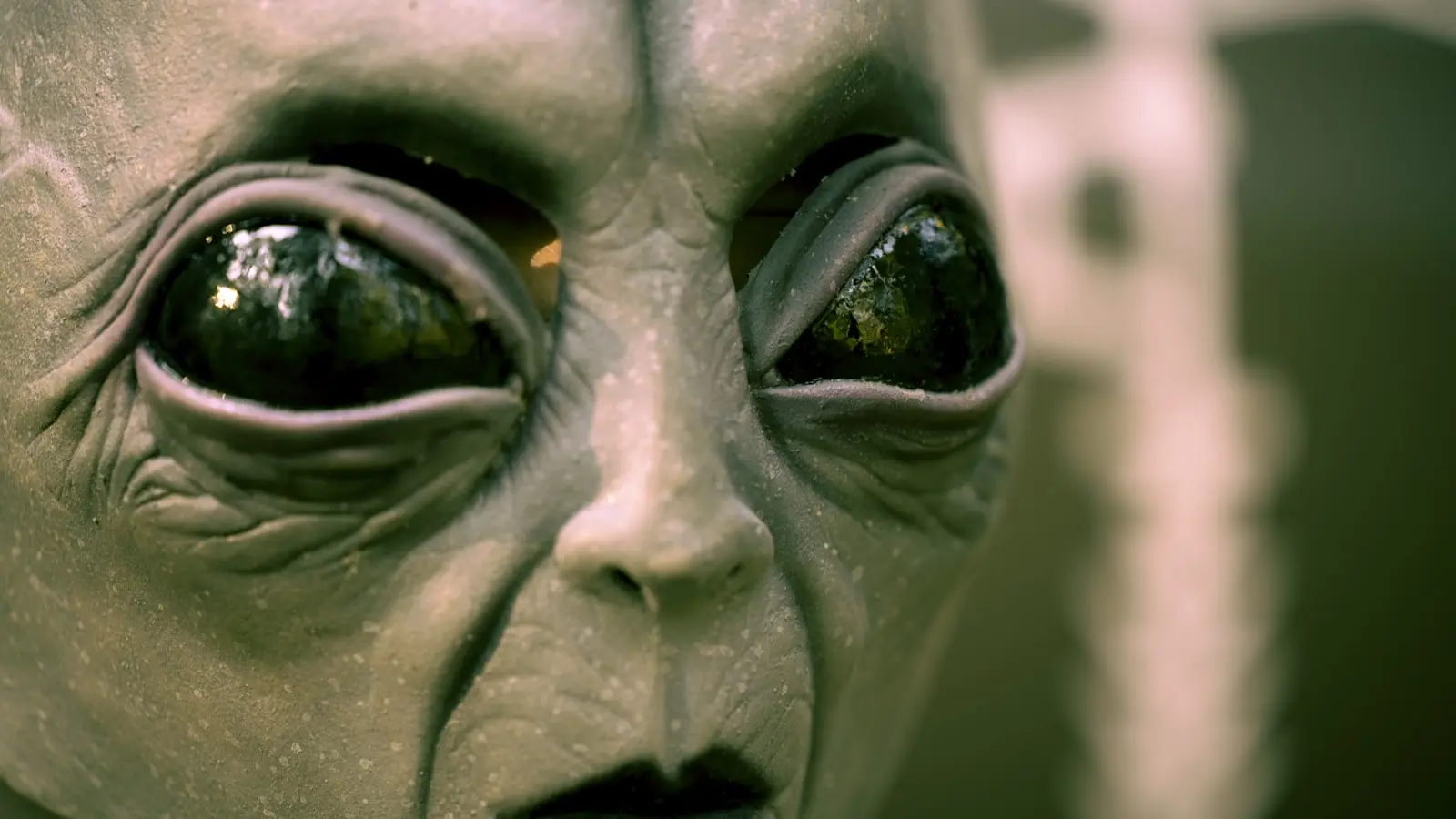
When Steven Spielberg’s ‘Disclosure Day’ premiered at a packed cinema in downtown Los Angeles, critics didn’t focus on the plot or the performances. They fixated on the creatures. The alien design, described in early reviews as both biologically plausible and emotionally evocative, has sparked immediate comparisons to Dennis Villeneuve’s ‘Arrival’ and Spielberg’s own ‘Close Encounters of the Third Kind’. The discussion on Reddit, where users dissected leaked stills and reaction threads, turned the design into a cultural flashpoint. This is not hyperbole. It’s a signal.
The Biology of Belief
The aliens in ‘Disclosure Day’ are non-humanoid. They possess bioluminescent skin that shifts in color and intensity, a feature that astrobiologists consulted for the film believe could be a natural result of a high-radiation environment. The creatures avoid the monster archetype entirely. Instead, they communicate via pulsing light patterns, a language that the film’s human protagonists must decipher through machine translation. Spielberg reportedly worked with a team of astrobiologists from NASA’s Exobiology branch to ground the design in real scientific possibility. The result: organisms that look like they evolved, not like they were imagined on a storyboard. (Frankly, many alien designs in blockbusters feel like rubber suits with ridges.) This one feels like a nature documentary from another planet.
Reddit users in the review thread immediately drew a line to the heptapods in ‘Arrival’. Those creatures, too, were non-humanoid, relied on visual communication, and were designed with input from linguists and physicists. The comparison is apt but incomplete. ‘Arrival’ used alien biology as a narrative device to explore time and language. ‘Disclosure Day’ uses it to explore the limits of human perception and the ethics of contact. The bioluminescence is not just a visual trick. It is a metabolic process, visible because the atmosphere of the alien homeworld is thick with particulates. The light carries meaning. The light carries history. One Reddit commenter noted, “It’s like if a jellyfish evolved into a philosopher.” That line captures the emotional resonance.
A Return to Form or a New Path?
Spielberg has a long history of crafting empathetic aliens. E.T. was a lost child. The visitors in ‘Close Encounters’ were curious travelers, almost gentle. But ‘Close Encounters’ relied on human emotion to bridge the gap. The aliens themselves were vaguely humanoid, with elongated forms and large eyes—a design that tapped into a universal parental instinct. ‘Disclosure Day’ abandons that shortcut. The creatures are not cute. They are not threatening. They are simply other. And that otherness is communicated through biological plausibility rather than anthropomorphic cues. Critics have called it a return to form for Spielberg, but that framing understates the shift. It is not a return. It is a progression. The director, now in his late seventies, is pushing toward harder science fiction. (Who else could convince a studio to greenlight a $150 million film starring a non-humanoid alien that doesn’t speak a word of English? Only Spielberg.)
The economics here are interesting. ‘Disclosure Day’ reportedly had a budget of $150 million, a significant portion of which went to the creature effects—a combination of animatronics, puppetry, and CGI. The decision to avoid fully digital aliens was intentional. Spielberg wanted the actors to react to something real, not a tennis ball on a stick. That physicality translates to the screen. The bioluminescence was achieved through fiber-optic strands embedded in silicone skin, powered by small batteries. Engineers on set described the creatures as “walking chandeliers.” The result is a tactile presence that no amount of digital rendering can replicate. (Thankfully, practical effects are making a quiet comeback.) The budget also covered the work of Dr. Karen Chin, a leading astrobiologist who consulted on the alien biochemistry. She insisted that the creatures have a circulatory system visible through translucent skin, and that their light patterns follow circadian rhythms. These details may seem minor, but they build a world that feels lived-in.
The Cultural Moment
Why now? The fascination with scientifically grounded aliens reflects a broader cultural shift. Audiences have grown tired of monster-of-the-week franchises. The Marvel formula, with its endless parade of vaguely reptilian villains, has exhausted itself. Viewers want complexity. They want first contact stories that treat the alien as a sentient being, not a combatant. ‘Arrival’ succeeded because it respected the intelligence of the audience. ‘Disclosure Day’ follows that playbook but adds a layer of biological wonder. The film doesn’t just ask, “What would an alien look like?” It asks, “What would an alien’s life cycle be?” That question leads to a design that is both strange and inevitable.
Reddit’s reaction is instructive. Users praised the design for avoiding the “monster” trope. One thread noted, “It’s not scary. It’s fascinating. You want to watch it, not run from it.” That emotional response is rare in modern sci-fi. The film industry has trained audiences to fear the unknown. Spielberg flips that script. The aliens in ‘Disclosure Day’ are ancient, their light patterns encoding millennia of knowledge. The human characters are the intruders, the primitive ones. That reversal mirrors current anxieties about climate change and technological hubris. The film suggests that humanity’s greatest challenge is not defeating an enemy but understanding a stranger. (Is this a metaphor for immigration? For AI? For the future of diplomacy? Yes.)
Technical Execution and Its Limits
The design team, led by veteran creature designer Neville Page, spent two years developing the alien morphology. They modeled the skeletal structure on deep-sea invertebrates, giving the creatures a fragile, almost glass-like appearance. The bioluminescence was programmed to pulse in complex sequences, mimicking a natural language. Critics noted that the film’s middle act, where the humans attempt to decode the light patterns, is the emotional core. It is a sequence of pure communication, no action, no explosions. Ten minutes of silence and light. (Imagine pitching that to a studio executive.) That the film works at all is a testament to Spielberg’s narrative authority. He has earned the right to slow down.
But the design is not without trade-offs. Some reviews pointed out that the aliens’ body movements are deliberately slow, almost meditative, which can feel static on screen. The bioluminescence, while beautiful, requires a dark environment to be visible. The film’s lighting design is therefore dim, which has led to complaints about visual clarity in certain scenes. However, these are minor quibbles in a landscape where most alien designs are derivative. ‘Disclosure Day’ risks boredom in pursuit of wonder. It is a risk that pays off.
Conclusion
The alien design in ‘Disclosure Day’ is not just a aesthetic choice. It is a statement. It declares that science fiction can be both rigorous and emotional. It rejects the lazy shorthand of humanoid aliens and instead builds a creature that exists on its own terms. The comparisons to ‘Arrival’ and ‘Close Encounters’ are inevitable, but they miss the point. This is not a homage. It is an evolution. Spielberg has taken the best elements of both films—the linguistic puzzle of ‘Arrival’ and the wonder of ‘Close Encounters’—and synthesized them into something new. The result is a alien that feels real, ancient, and worthy of our attention. And in a culture desperate for meaningful connection, that might be exactly what we need.