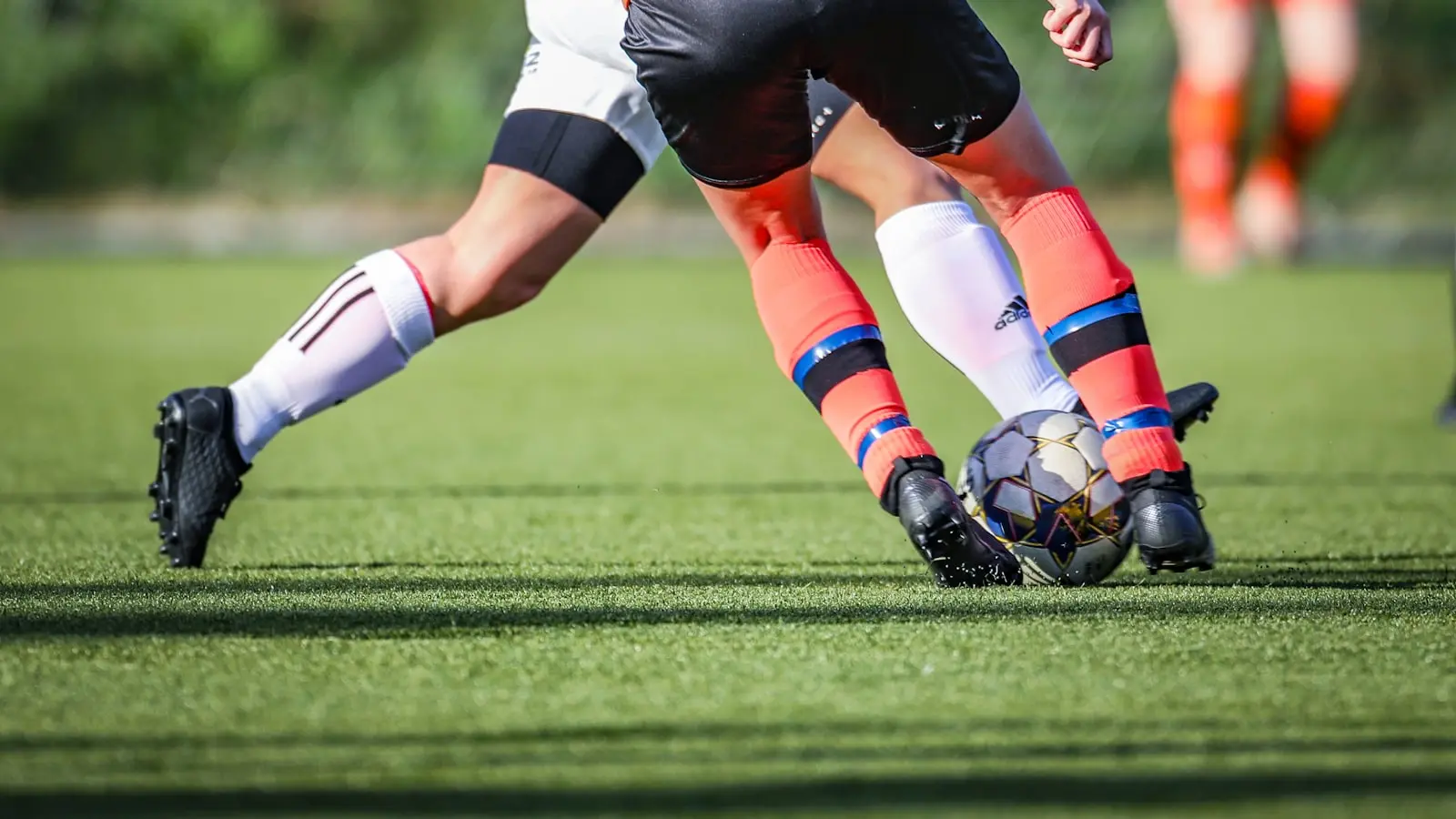
A defensive midfielder can determine whether a lost pass becomes a routine recovery or an immediate counterattacking chance. The role is not simply to win the ball back. In the first seconds after possession is lost, the number six must protect the middle, restrict the opponent’s best forward pass, slow the break and give teammates time to recover.
This responsibility is especially important for teams that attack with several players ahead of the ball. Advanced fullbacks, high number eights and wide rotations can create strong attacking positions, but they can also leave space between the attack and the center-backs. The defensive midfielder is often responsible for managing that space.
Key Takeaways
- A defensive midfielder’s first priority after a turnover is usually to protect the central route to goal, not chase the ball at any cost.
- Good rest defense depends on spacing and cover behind the ball, not simply on how many players remain back.
- Scanning, screening and cover shadows can prevent dangerous passes before a tackle or interception is needed.
- Counterpressing, retreating and tactical fouls are context-dependent choices shaped by space, support and risk.
- Tackles and interceptions reveal only part of the defensive midfield role because much of its value is off the ball.
The Turnover Moment and the Number Six
Football transition defense is a team’s response immediately after losing possession. It is the unstable period before the team either regains the ball, restores its defensive shape or faces an opponent running into open space.
A side can look secure in possession and suddenly appear exposed after one misplaced pass or failed dribble. Attacking structures are designed to stretch the pitch and commit players forward. When possession changes hands, those same positions can leave defenders outnumbered or open a direct route through midfield.
The defensive midfielder’s first decision is simple in theory but difficult at speed: is there a safe chance to recover the ball, or is protecting space more important? The answer depends on where the turnover occurs, which teammates are nearby, how many opponents can run forward and what cover remains behind the ball.
Imagine a central turnover near the opposition penalty area. Both fullbacks are high, a number eight is ahead of the ball and an opposing striker is ready to run between the center-backs. If the number six charges directly at the ball carrier and is beaten, one pass can open the center of the pitch.
In that situation, the stronger defensive midfield choice may be to stay between the ball and goal. The number six can retreat a few yards, block the direct pass and steer the counterattack toward a wider, slower route. It may not produce a highlight-reel tackle, but it can prevent a clear chance.
Rest Defense Makes Counterattacks Harder
Rest defense describes the players and positions a team keeps behind or around the ball while attacking so it can defend a turnover. It is not a fixed number of players left back. Its quality depends on spacing, balance, the likely location of a lost ball and the opponent’s available outlets.
The number six is often central to that structure. Positioned ahead of the center-backs, the defensive midfielder links the attacking unit to the defensive line while staying close enough to respond to a central turnover.
Central protection matters because the shortest route to goal usually runs through the middle. A ball carrier who can drive forward centrally has options on both sides and can force center-backs into difficult decisions. If the defensive midfielder closes that corridor, the opponent may have to play wide, where the angle is less direct and recovering defenders gain time.
Attacking fullbacks make this task more demanding. When both are high, the number six may need to protect the area in front of the center-backs while anticipating passes into the channels the fullbacks have left. If the number eights are also advanced, there may be little midfield support after a central loss.
That is the trade-off within aggressive attacking shapes. Committing more players to the final third can improve combinations and sustain pressure, but the team must still prepare for failure. A defensive midfielder cannot cover every route alone, so teammates need sensible distances, clear communication and enough central cover to avoid leaving every lane open at once.
Screening, Scanning and Cover Shadows
Midfield screening means positioning to block or discourage passes into dangerous central receivers. A good screen does not always touch the ball. Often, it makes the most dangerous pass look too risky to attempt.
A number six can screen by standing on the line between the ball carrier and an advancing striker, attacking midfielder or opposite number eight. That can force a longer, wider or slower pass. Even a brief delay may allow a fullback to recover, a center-back to adjust or another midfielder to apply pressure.
A cover shadow works in a similar way. In simple terms, the midfielder uses body position to pressure one option while cutting off another. By approaching the ball carrier at an angle instead of straight on, the number six can close the inside lane while still making the player feel under pressure.
Scanning makes that positioning possible. Before a turnover, an effective defensive midfielder is repeatedly checking the pitch: where are the opponent’s runners, which teammate is out of position, where is the nearest cover and which pass would create danger most quickly?
That earlier information helps explain why some interceptions appear effortless. The visible interception is often the final step. The more important work may have happened seconds earlier, when the midfielder noticed a striker moving into a blind-side pocket or recognized that a fullback could not recover in time.
Consider two reactions to a loose ball in midfield. One midfielder charges toward the ball carrier and leaves an open pass into a player between the lines. Another holds the central lane, angles the ball carrier toward the touchline and waits for support. The first option can work if the press arrives cleanly; the second is often safer when an easy forward pass is available.
Neither choice is always correct. Distance to the ball, cover behind the midfielder, the opponent’s numbers forward and the ball carrier’s body shape all matter. Effective number six positioning is active decision-making about which danger must be removed first.
Counterpress, Retreat or Tactical Foul?
Counterpressing is an immediate, coordinated attempt to regain possession after losing it. It is most useful when the ball is lost near several teammates, the receiver is under pressure and the opponent has limited forward options.
A defensive midfielder can support counterpress tactics by stepping toward the turnover zone, challenging the opponent’s first touch or holding a position behind teammates who press. The number six is often the safety layer: close enough to collect a loose ball, but not so close that one pass removes the entire midfield from the play.
Retreating is usually safer when the first press has been bypassed, central space is exposed or the opponent has a numerical advantage. If attackers are running at isolated defenders, the priority shifts from immediate recovery to delaying the attack.
Delaying is not passive. The midfielder can jockey the ball carrier, stay side-on, protect the inside channel and encourage play toward the wing. The aim is to prevent the early through ball and force the counterattack to take extra touches, extra passes and less dangerous angles.
A tactical foul can sometimes interrupt a dangerous break, but it is not automatically the intelligent option. It can bring a free kick, disciplinary action and the risk of reduced availability later in the match. The location, the level of defensive cover and the danger of the developing attack all matter.
A foul near goal or in a dangerous crossing area may simply trade one problem for another. If defenders are recovering and the opponent is moving away from the center, staying on the feet may be the better choice. The ideal outcome is often to stop the break from developing without needing a foul.
Why Tackles and Interceptions Miss the Full Role
Tackle and interception totals show useful outcomes, but they do not capture the full defensive midfield role. They cannot fully measure a player who blocks a passing lane, communicates a teammate into position or delays a break until the defensive shape returns.
A midfielder with few tackles may be ineffective, but the opposite may also be true. Opponents may avoid the central route because the player’s positioning makes it unattractive. In that case, the absence of a visible action can indicate that the screen worked.
Raw defensive numbers also reflect team context. A player in an unstable structure may record many recoveries because opponents repeatedly reach dangerous areas. Another may make fewer visible interventions because the team’s rest defense prevents those situations from developing.
A more useful evaluation asks what happened around each action. Where did the turnover occur? How many teammates were behind the ball? Did the opponent play through the center? Was the first forward pass stopped, delayed or forced wide? Could the rest of the team recover?
This is why defensive midfielder counterattacks should not become a search for one ideal player type. Some teams need a fast ball-winner who can cover broad areas. Others need a composed positional player who reads passing lanes and protects the center. The right blend depends on the formation, attacking risk, opponent and match state.
FAQ: Defensive Midfielders and Counterattacks
What should a defensive midfielder do immediately after losing possession?
First, assess the danger: the turnover location, central runners, available cover and whether a safe counterpress is possible. The usual priority is to protect the middle, stop the most direct forward pass and then decide whether to press, delay or retreat.
Why does a defensive midfielder sometimes retreat instead of tackling?
Retreating can preserve the central screen and stop the opponent from playing beyond the first defender. A failed tackle may open the route to goal, while a controlled retreat can buy the seconds needed for fullbacks, number eights and center-backs to recover.
How do attacking fullbacks change the defensive midfield role?
High fullbacks can leave wide channels and increase the space the number six must monitor after a turnover. The midfielder needs sharper anticipation and closer coordination with center-backs and advanced midfielders because protecting the center alone may not be enough when opponents can attack the channels quickly.