
The Shift in Transit Dominance
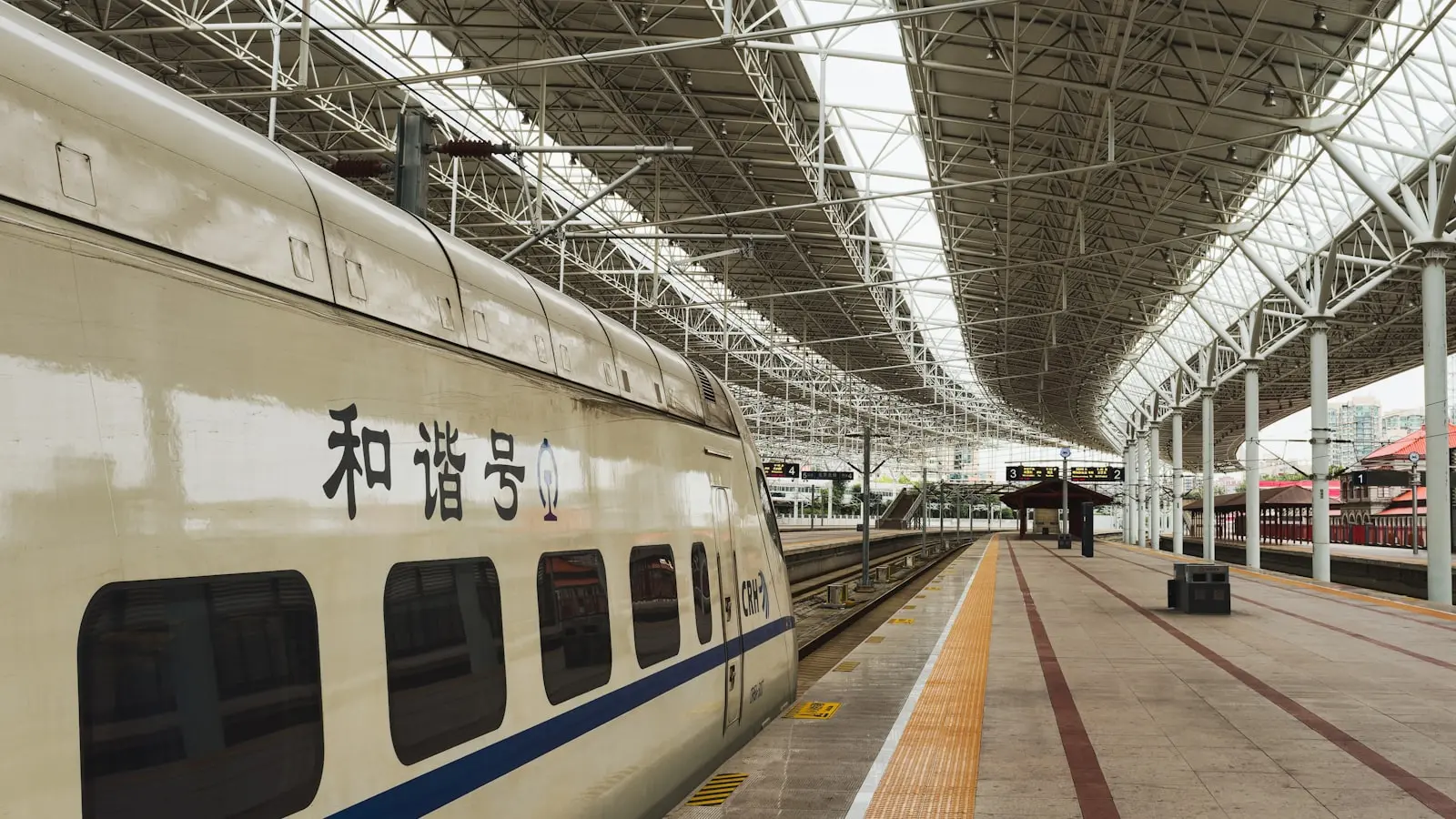
With over 45,000 kilometers of high-speed track now operational, China’s rail network has effectively displaced short-to-medium haul domestic aviation as the primary artery for national commerce. The China Railway Administration reports that this infrastructure now links core economic hubs, including Beijing, Shanghai, and Hangzhou, with a degree of reliability that air travel has consistently failed to match. (The scheduling precision is, by any objective metric, a logistical triumph.) When business travelers bypass the volatility of airport security and unpredictable runway delays for the clockwork efficiency of a Fuxing bullet train, the economic implications go beyond mere convenience.
Infrastructure as an Economic Lever
For two decades, the state has prioritized rail expansion as a mechanism to minimize travel friction between fragmented industrial centers and emerging regional markets. This is not merely about transportation; it is about market integration. By reducing the physical barriers between disparate cities, the government has facilitated a more fluid movement of labor and capital.
- Reliability: Rail service frequency operates on a modular, high-density basis that air carriers cannot replicate on secondary routes.
- Efficiency: Center-to-center transit removes the time-cost of navigating suburban airports, effectively saving hours per trip.
- Cost-Effectiveness: Standardized pricing structures provide predictable overhead for corporate logistics compared to the fluctuating nature of airline fuel surcharges.
Analyzing the Operational Advantage
Domestic aviation faces inherent bottlenecks that rail does not. Air traffic control constraints, weather-related ground stops, and the sprawl of modern international airports create a compounded inefficiency. In contrast, the high-speed rail system functions as a linear, high-velocity conveyor belt. (Does the convenience of a station in the city center outweigh the speed of a jet? The data suggests it does.) When the transit time is measured from office door to office door, the math heavily favors the train.
Impact on Regional Markets
The direct correlation between rail accessibility and regional economic growth has become a focal point for analysts. By collapsing the effective distance between economic hubs, the network has allowed small-to-medium enterprises to leverage talent pools across vast distances without the need for physical relocation. This mobility has fostered a tighter integration of services and goods, essentially compressing the country into a single, cohesive economic zone.
The Cost of Efficiency
While the efficiency gains are undeniable, the capital expenditure required to maintain a 45,000-kilometer network of this scale is immense. The question remains regarding the long-term sustainability of these costs as the network continues to expand into less dense, interior provinces. (Can the demand side keep pace with the supply-side expansion?) Analysts continue to monitor whether the network will eventually move toward a model of full cost recovery or if it will remain a permanent, subsidized fixture of national economic policy.
Conclusion
China’s rail infrastructure represents a fundamental shift in how a large-scale economy manages internal movement. By prioritizing rail over air for regional connectivity, the nation has achieved a level of logistical integration that serves as a case study for industrial policy. For the business traveler, the choice is no longer just about comfort; it is a calculated decision based on the metrics of time, reliability, and economic access.