
The transition to hybrid work environments has shifted the focus of interior design from aesthetic appeal to functional endurance. When the dining room table becomes a permanent desk, the physical environment begins to dictate the rhythm of professional output. Research from the University of California Berkeley confirms this necessity, noting that optimized physical workspaces contribute to a 15% increase in task-completion efficiency among remote employees. (The data is clear: environment influences output.)
Building a workspace that prioritizes professional longevity without exceeding a 500 dollar budget requires a ruthless allocation of capital. The most effective approach is to ignore ambient aesthetics and direct the entire budget toward ergonomics. An adjustable-height standing desk and a high-quality orthopedic chair represent the foundation of the workspace. These items endure wear, while secondary accessories like decorative lighting or stylized storage are secondary concerns. (Focus on the spine, not the surface.)
Prioritizing Ergonomics Within a Budget
To maintain a strict 500 dollar limit, hardware procurement must shift away from retail-standard furniture stores. The surge in hybrid work models has created a robust secondary market for refurbished enterprise-grade equipment. Companies frequently offload high-end office furniture after contract cycles, providing an opportunity for individuals to acquire professional-tier chairs and desks for a fraction of their original cost.
- The Orthopedic Investment: Secure a refurbished commercial-grade task chair. Features such as lumbar support, adjustable armrests, and tension control are non-negotiable for eight-hour workdays.
- The Standing Desk Mechanism: Opt for a manual or entry-level motorized standing desk frame. If the budget is tight, invest in a sturdy desktop surface paired with a reliable height-adjustable frame rather than purchasing a complete all-in-one unit.
Managing Visual and Cognitive Clutter
An efficient workspace serves as a mental anchor. Productivity experts argue that the psychological separation between ‘living’ and ‘working’ is a primary driver of performance. When a workspace is cluttered, the mind cannot transition into a state of deep focus. Cable management serves as the simplest, most cost-effective method to reduce visual friction. A simple cable tray or a set of Velcro ties can eliminate the chaotic mess of tangled wires that typically plagues home setups. (Frankly, a clean desk is the baseline for a clean thought process.)
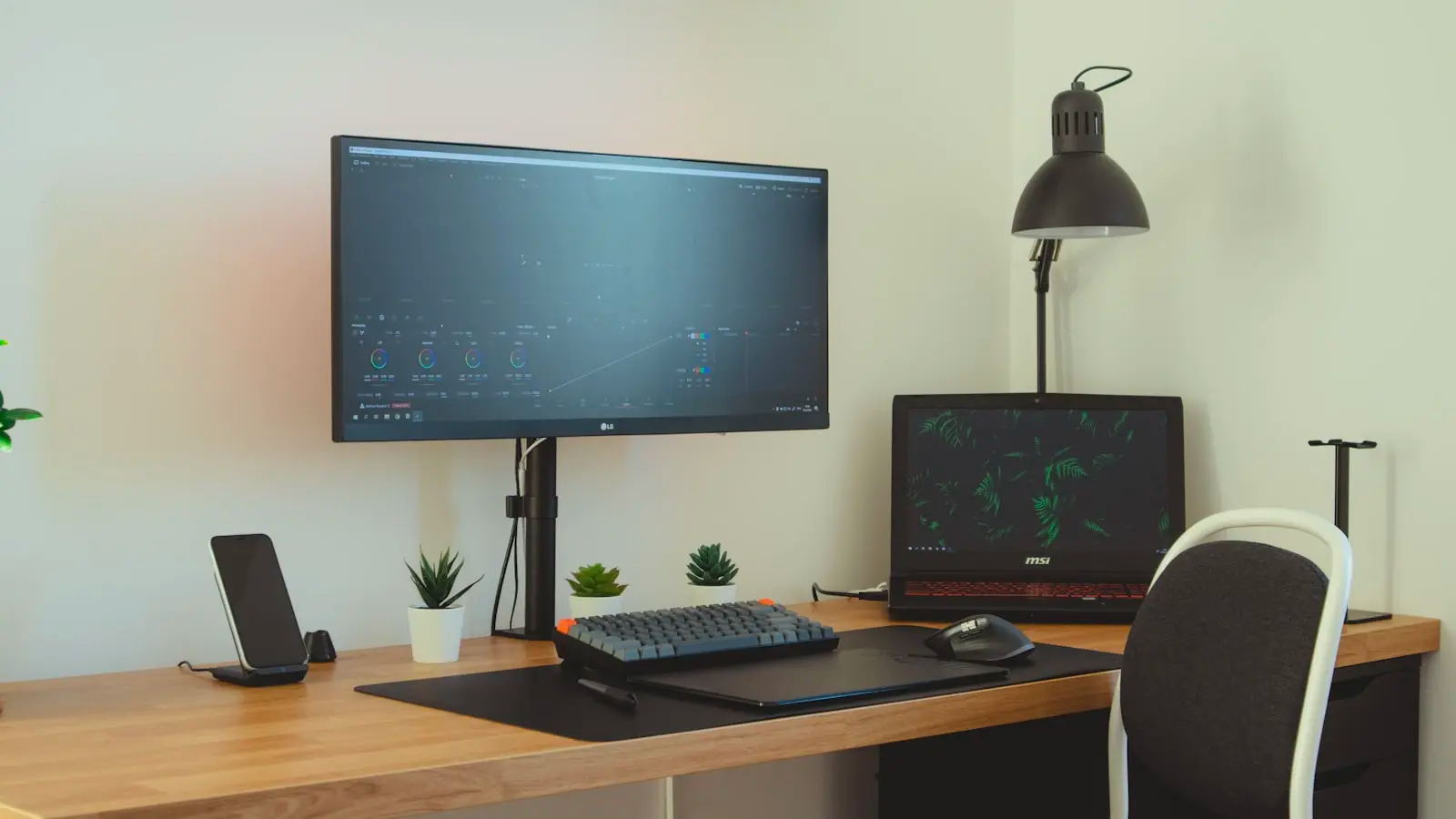
Furthermore, monitor selection should be deliberate. Instead of purchasing multiple smaller screens, a single ultra-wide monitor can offer the same screen real estate while reducing the footprint on the desk and the number of necessary cables. This approach saves space and maintains a streamlined appearance that mirrors the organization of a professional office.
The Psychological Architecture of Remote Work
Beyond the tangible equipment, the layout of the workspace influences how an employee operates. A desk positioned facing a window can provide natural light, which regulates circadian rhythms, yet it can also serve as a distraction. Ideally, the desk should be placed perpendicular to windows to minimize screen glare while maintaining a connection to the exterior environment.
Separation is the final variable. Even within a small footprint, defining a ‘work zone’ through lighting or positioning creates a boundary. When the laptop closes, the boundary must hold. The hardware matters, but the discipline of the space matters more. If the desk is always cluttered, the professional boundary becomes porous. (Establish the zone, then defend it.) By allocating funds toward lasting ergonomic health and focusing on the reduction of cognitive load, an efficient, professional-grade workspace is achievable well within a 500 dollar threshold.