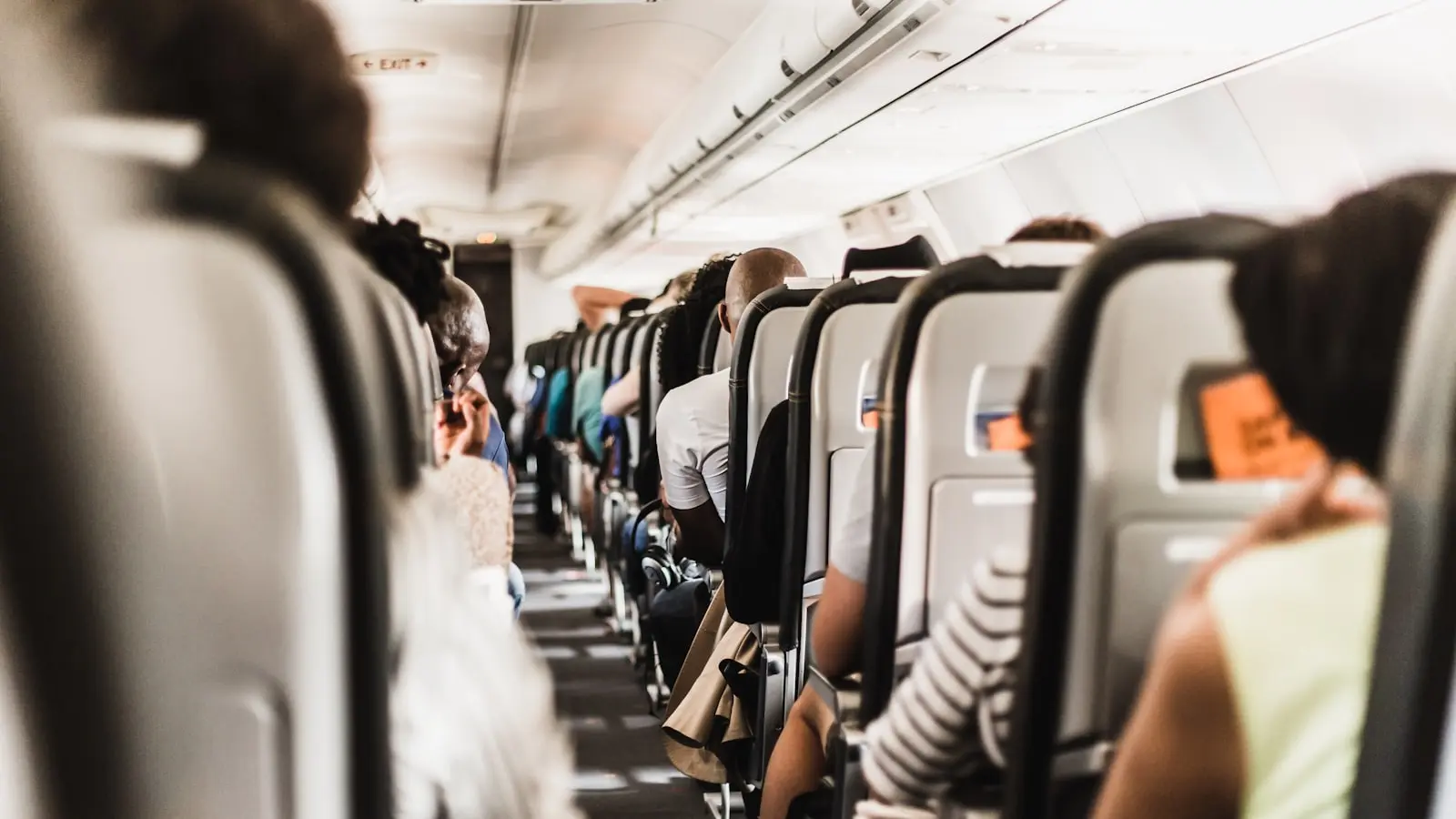
The Hidden Cost of a 30 Pound Ticket
When you board a 6 AM Ryanair flight to Barcelona, you are not simply buying a seat. You are entering a physiological stress test. The combination of predawn departure, cramped seating, rushed transfers, and a disrupted sleep schedule creates a cumulative load that can negate the restorative purpose of a weekend getaway. Frequent travelers on r/travel and r/london have documented this pattern for years: the bargain fare often comes with a deferred bill payable in exhaustion.
The economics of ultra-low-cost carriers (ULCCs) rely on maximizing aircraft utilization. This means early departures, tight turnaround times, and minimal legroom. A standard pitch of 28 to 30 inches forces the knees into a fixed 90-degree angle, restricting venous return and increasing the risk of deep vein thrombosis (DVT) over multiple flights. Cost arbitrage does not stop at the ticket price; it extends to human physiology.
The Physiological Toll of Cabin Constraints
The human body was not designed for repeated exposure to low humidity, reduced barometric pressure, and prolonged sitting in a semi-reclined position. Each flight induces a mild hypoxic state (cabin pressure equivalent to 6,000 to 8,000 feet), which lowers oxygen saturation by 2 to 4 percentage points in healthy adults. Over a single two-hour flight, the effect is negligible. Over three flights in a weekend, it compounds.
Sleep deprivation is the dominant driver. Many travelers skip sleep before dawn flights to save on accommodation costs \u2014 a strategy openly discussed on Reddit. The result is a sleep debt that accumulates rapidly. A 2023 study in the Journal of Travel Medicine found that travelers who slept fewer than four hours before a flight reported 40 percent higher fatigue scores post-arrival.
Dehydration amplifies the problem. Cabin air has a relative humidity of roughly 10 to 20 percent (compared to the typical indoor 30 to 60 percent). This accelerates insensible water loss through the respiratory tract. Mild dehydration (1 to 2 percent body water loss) impairs cognitive function and mood \u2014 both of which are already challenged by disrupted circadian rhythms.
Evidence-Based Countermeasures
Compression Stockings
Compression stockings are the most mechanically sound intervention for reducing lower-limb discomfort and DVT risk. Meta-analyses confirm that graduated compression (15 to 30 mmHg) significantly improves venous blood flow velocity during prolonged sitting. They are not a placebo; they alter hemodynamics.
Hydration Protocol
Hydration strategies should go beyond "drink water." The effective protocol is to consume 250 to 300 mL of fluid per hour of flight time, but only if electrolytes are maintained. Water alone without sodium can dilute plasma and trigger diuresis (thankfully, the body regulates this, but travelers who rely on low-sodium beverages may still feel fatigued).
Noise-Cancelling Headphones
Noise-cancelling headphones reduce the neuroendocrine stress response triggered by engine hum and cabin chatter. A 2020 study demonstrated that continuous ambient noise above 75 dB (common on aircraft) elevates salivary cortisol in susceptible individuals. Active noise cancellation lowers perceived load, allowing quieter restorative micro-phases.
Movement and Positioning
Position changes matter more than pillow design. Neck pillows do not prevent forward head slump in a narrow seat (some designs even exacerbate misalignment). The better intervention is to periodically roll the shoulders, perform seated calf raises, and shift weight every 20 minutes. This maintains circulation and reduces static muscle strain.
Pacing Activities
Pacing activities between flights is the strategy most often overlooked. The temptation to sprint through airports to maximize sightseeing time backfires. Scheduling a 90-minute buffer between arrival and any demanding activity \u2014 a sit-down meal, a restroom stop, a slow walk through the terminal \u2014 allows the autonomic nervous system to recalibrate.
The Airport Rush and Layover Fatigue
Many budget itineraries from London involve rushed transfers at secondary airports. A 45-minute layover at Stansted or Charleroi often means a bus gate, a walk across tarmac, and no time for water refills. The cortisol spike from running to a departure gate persists well into the flight. Analysts report that this repeated activation of the sympathetic nervous system is a faster route to burnout than the flight itself.
A simple fix is to deliberately slow down. If the connection is tight, accept that you will miss it and rebook (the cost of a missed flight is often lower than the health cost of sprinting). If the connection is comfortable, use the time to sit, rehydrate, and close your eyes. (Is this always possible? No. But when it is, it pays dividends.)
Preparing for the Return
The fatigue from a weekend of budget flights does not end when the plane lands. The return to London on a Sunday evening with a 5 AM departure the next morning creates a cycle of sleep deprivation that can last days. Travelers who fail to account for recovery time report reduced productivity and increased irritability.
The evidence supports a minimum of two full sleep cycles (16 to 18 hours) to return to baseline after a weekend of disrupted rest. That means not scheduling critical meetings on Monday morning. It also means resisting the urge to "power through" the fatigue with caffeine, which only masks the underlying debt.
The Reality of Weekend Ultra-Budget Travel
The data (or rather, the aggregate experience of thousands of Reddit users) suggests that the cost-benefit calculus changes when flights exceed two in 48 hours. A single round trip under 3 hours each way may be tolerable. A three-city hop with layovers under 60 minutes produces measurable degradation in immune function and cognitive performance.
Is the solution to avoid budget airlines entirely? No. The evidence does not support that. The better question is whether the traveler respects the constraints of the model. If you accept that a 30 pound ticket carries a physiological cost, you can budget accordingly: sleep, hydration, movement, and strategic rest.
Account for the recovery time. A traveler who returns to London after a 5 AM departure on Monday with four hours of fragmented sleep across the weekend will need approximately two full sleep cycles (16 to 18 hours) to return to baseline. That is not an opinion. It is a biological floor.
Summary
Budget airlines thrive on efficiency. The traveler\u2019s body does not. The mismatch between operational demands and human physiology is the root cause of travel fatigue in this segment. Compression socks address circulation. Hydration addresses fluid balance. Noise cancellation addresses sensory load. Pacing addresses the cumulative stress schedule.
None of these are remedies. They are damage control. The only true prevention is understanding the cost and deciding whether the destination is worth the deferred exhaustion.
(The answer, for many, remains yes \u2014 but only with preparation.)