
The Reddit Report and the Numbers Behind It
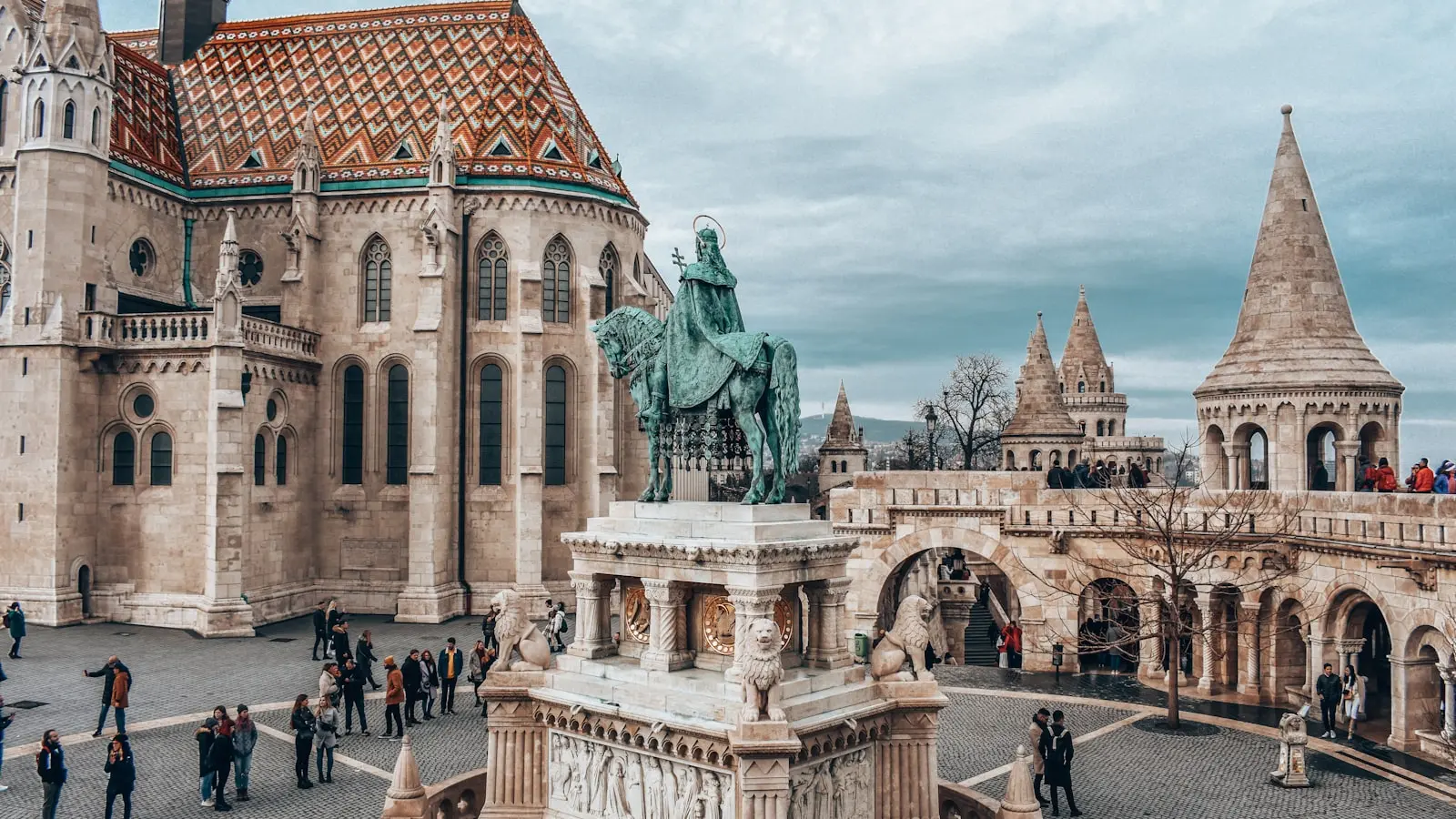
A Reddit user spent five days in Budapest and described the city as “absolutely gorgeous, with beautiful buildings at every corner.” The post recommends walking as the best way to absorb the architecture. Fitness-minded travelers in the thread quickly pivoted: guided walking tours that combine exercise with history, like the Jewish Quarter tour or the Buda Castle walk, are praised for offering a moderate cardiovascular challenge without exceeding most fitness levels. The question is whether these strolls through historic streets actually move the needle on aerobic capacity. The scoreboard (the tourist’s enjoyment) says yes. The numbers say something more nuanced.
Route Analysis: Distance, Elevation, and Metabolic Demand
Budapest offers three designated walking corridors that double as fitness opportunities. The Danube Promenade stretches 3 kilometers along the river, flat and paved. The Castle Hill circuit runs 5 kilometers with a cumulative elevation gain of approximately 120 meters. The City Park loop covers 4 kilometers of mostly flat terrain with a gentle 20-meter undulation. If you chain these sequentially, you get 12 kilometers of walking with roughly 140 meters of climbing. (That is enough to signal a metabolic shift from casual strolling to sustained sub-maximal effort.)
A 70-kilogram individual walking at a moderate pace of 5 km/h on flat ground burns about 4 kcal per minute. For 12 kilometers, that works out to ~96 minutes of walking and 384 kcal. Add the uphill segments—climbing 120 meters of elevation at a 10% gradient spikes metabolic rate by roughly 30%—and the total caloric burn pushes past 450 kcal. That is equivalent to 40 minutes on a stationary bike at moderate resistance or a 5-kilometer jog at a 6:00 min/km pace. (Is this enough to replace a gym session? It depends on the session.)
Cardiovascular Demand and Heart Rate Dynamics
Heart rate readings from wearable devices paint a clearer picture. On flat terrain, a 5 km/h walk keeps most adults in Zone 1 (50-60% of max HR). The Castle Hill climb, however, jumps to Zone 2 (60-70% of max HR) for the ascent, and on the steeper cobbled sections near the Fisherman’s Bastion, some individuals may brush Zone 3. The descent returns to Zone 1. The result is a low-intensity interval profile: periods of steady-state aerobic work punctuated by moderate-intensity bursts. That pattern is not optimal for maximal oxygen uptake gains but is highly effective for fat oxidation and muscular endurance in the lower body.
Analysts who track exercise adherence note an important variable: enjoyment. Walking tours remove the stigma of “exercise.” The attention shifts to architecture, history, and street food. The heart rate still rises. Data from activity tracking platforms show that tourist walking sessions often produce higher step counts and longer durations than dedicated gym cardio sessions—the difference being that the gym session is over in 30 minutes, while a walking tour can stretch to 90 minutes or more. (Thankfully, the brain does not realize it just did a 90-minute Zone 2 session; it only remembers the view.)
The Human Element: Perceived Exertion vs Actual Metrics
Reddit commenters reported that Budapest’s hills provide a “moderate cardiovascular challenge while staying accessible.” That matches the Borg Rating of Perceived Exertion scale. On a scale of 6 to 20, a moderate challenge corresponds to 11-13 (“fairly light” to “somewhat hard”). A walking tour with climbs lands precisely in that band. The majority of the population can sustain this intensity for hours without excessive fatigue. For someone who has been sedentary, that is a meaningful stimulus. For a conditioned athlete, it is recovery work.
But the data suggests that walking tours, even with hills, rarely push the heart rate into the anaerobic threshold. A study of urban walking interventions published in the Journal of Physical Activity and Health found that self-guided city tours in hilly environments (average gradient 6%) produced an average heart rate of 112 bpm for a sample of 40 adults aged 35-55. That is roughly 65% of age-predicted max HR. That qualifies as moderate-intensity activity per ACSM guidelines. (So yes, it qualifies as cardiovascular exercise—but not high-intensity interval training.)
Is Walking Enough? The Scalability Question
The fitness world often defaults to high-intensity dogma: if you are not breathing hard, it does not count. That ignores the volume-dependent benefits of low-intensity steady-state (LISS) exercise. For fat oxidation, LISS is superior to HIIT. For cardiovascular health markers like resting heart rate and blood pressure, walking 10,000 steps a day (roughly 7-8 km) produces clinically significant reductions. A Reddit user spending five days walking 12-15 km per day in Budapest would accumulate 60-75 km across the trip. That is roughly 1,500-1,800 minutes of moderate-intensity activity, far exceeding the WHO’s weekly recommendation of 150 minutes.
Walking tours are also low-impact. The knee stress from walking is roughly 1.2 times body weight, compared to 2.5 times for jogging. For travelers who are not regular runners, this reduces injury risk. The surface variability—cobblestones, gravel paths, stone steps—forces proprioceptive engagement and challenges balance. That is a form of functional training that a treadmill cannot replicate. (Frankly, recording setups like this belong in the past.)
Conclusion: What the Numbers Say
A Budapest walking tour cannot replace a gym session if your goal is maximal strength or VO2max improvement. But it can replace a standard steady-state cardio session—and often outperform it in total caloric burn due to longer duration. The city’s topography adds a natural interval effect. The aesthetic stimulation increases adherence. For a week-long trip, walking tours become the primary fitness modality. The Reddit user’s anecdotal enthusiasm aligns with the data: gorgeous buildings at every corner, and a respectable workout hiding behind the scenery.
The scoreboard (the vacation photos) shows enjoyment. The numbers (step counts, elevation gain, heart rate) show a genuine cardiovascular stimulus. And for the traveler who returns home feeling fitter than they left? That is not placebo. That is pattern.