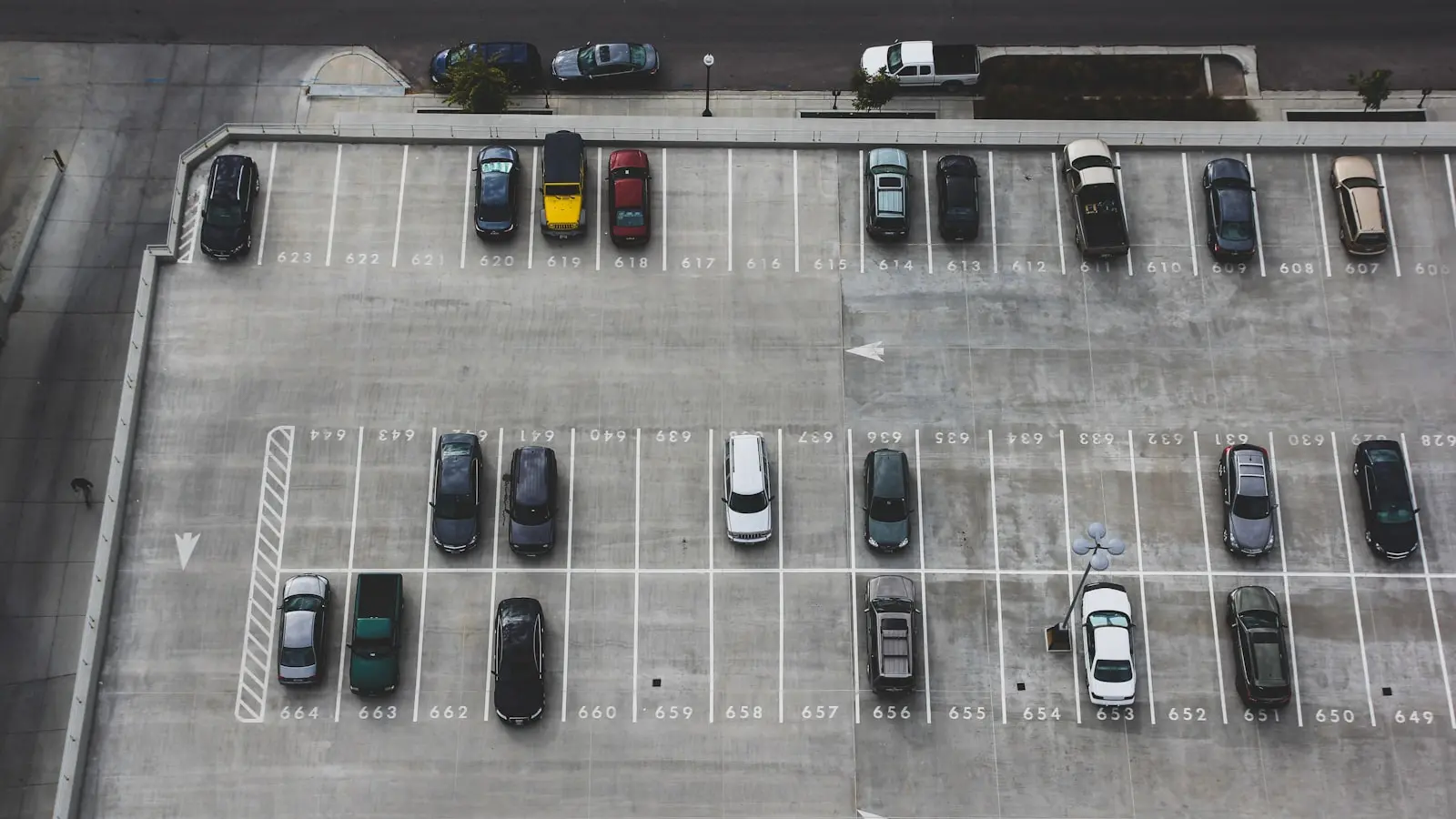

A patch of asphalt in Brooklyn becomes contested territory. On one side, a resident circles the block, searching for the city’s most elusive prize: a legal parking spot. On the other, the new owner of a converted warehouse, its roll-down metal door now guarding a recording studio instead of delivery trucks. A hand-painted sign declares an “active driveway.” Threatening notes appear on the windshields of those who dare to park there, promising a tow truck’s imminent arrival. The conflict is not merely about parking. It is a quiet, brutal war over the definition of space, fought on the narrow strip of public land where the sidewalk meets the street.
This specific skirmish exposes the weaponization of architectural ambiguity in dense urban landscapes. The entire dispute hinges on a simple, sloping piece of concrete known as a curb cut. The central question becomes not one of courtesy, but of legal standing: does the warehouse owner have a legitimate claim to exclusive use of the public street in front of his property? The answer is buried deep within municipal code and the city’s labyrinthine bureaucracy. If the driveway is legally recognized by the city, the owner holds the power. The law permits the owner or renter of a property with a usable driveway (and no more than two dwelling units) to block it with their own registered passenger vehicle. Anyone else who parks there faces tickets and towing. The curb cut becomes a legally sanctioned barrier, privatizing a piece of the public commons.
Determining a driveway’s legality, however, is anything but straightforward. The New York City Department of Buildings (DOB) is the gatekeeper of such records, maintaining databases like DOB NOW and the Building Information System. An official permit for the curb cut should, in theory, exist within these systems. Yet for buildings decades old, where industrial infrastructure was once standard, the paper trail often evaporates into the digital ether. “You can’t necessarily create an active driveway on your own without getting the proper approval,” states Andreas E. Christou, a real estate lawyer with Woods Lonergan PLLC. The complexity of these record searches creates a gray area, an operational fog that property owners can exploit. For neighbors challenging the claim, the only practical recourse is often a 311 call, lodging a complaint about a potentially illegal curb cut. This triggers an official inspection, shifting the burden of proof from the resident to the city itself.
The Architecture of Entitlement
The warehouse stands as a monument to urban transformation. Across boroughs like Brooklyn, former industrial buildings are gutted and repurposed into loft apartments, art galleries, and boutique businesses. This process of gentrification injects new capital and residents into neighborhoods, but it also creates profound friction. The original design of these structures, built for commerce and logistics, clashes with their new domestic or creative functions. A garage door, once a portal for pallets and machinery, is now a design affectation, a nod to the building’s authentic industrial past.
Yet this architectural relic is not merely cosmetic. By retaining the garage door and the curb cut, the owner maintains the physical possibility of vehicular access, even if it is never used. This is the crux of the matter. “By keeping the curb cut and garage door and maintaining an opening that remains physically usable for vehicle access, your neighbor can ostensibly claim that it is his driveway,” explains Matthew Weiss, a lawyer specializing in traffic law. The intention behind the space becomes irrelevant. The recording studio inside could be filled with priceless analogue synthesizers, making it impossible to park a vehicle, but the external appearance of a functional driveway is often all that matters.
Parking enforcement agents, tasked with navigating these disputes on the street, frequently defer to visual cues over documented use. The presence of a curb cut and a garage-style door creates a powerful presumption. “Parking enforcement often still treats it as a driveway in practice, even if he personally chooses not to drive into the building,” Weiss confirms. This gap between the law as written and the law as enforced creates an incentive for property owners to preserve these features. The curb cut becomes an asset, a tool that carves out a private parking space from the public domain, significantly increasing the property’s functional value in a car-choked city. (A guaranteed spot can be worth thousands). The owner effectively leverages the building’s industrial ghost to claim a contemporary privilege.
The Unraveling of the Social Contract
The threatening notes left on windshields represent more than simple frustration. They signify a breakdown of the unwritten social contract that governs neighborhood life. In a city where millions of people coexist in close proximity, a complex system of subtle negotiations, shared understandings, and mutual tolerance is required to maintain civic order. The warehouse owner’s actions bypass negotiation in favor of unilateral declaration. The sign and the notes are assertions of power, an attempt to impose a new rule on the block through intimidation rather than consensus or clear legal right.
This behavior feeds on the ambiguity of the situation. Neighbors, uncertain of the law and unwilling to risk expensive tickets or a trip to the tow pound, are likely to capitulate. The contested parking spot remains empty, a testament to the owner’s successful campaign of territorial expansion. It is a raw display of urban territoriality, where perceived ownership of private property bleeds out onto the public street. The curb cut is no longer just a ramp for vehicles; it is a line in the sand, a physical demarcation of a new, privately enforced boundary.
This dynamic is not unique to one block in Brooklyn. It plays out across every rapidly changing city where the built environment is a collage of different eras and uses. Old zoning laws collide with new economic realities. The fight over a single parking spot becomes a microcosm for larger battles over gentrification, resource allocation, and the right to the city itself. It questions who gets to write the rules and whose interpretation of the urban landscape prevails. The dispute forces a fundamental question: does the street belong to everyone, or does it belong to the person with the most convincing sign and the most intimidating notes?
The resolution, if one ever comes, will arrive not through neighborly discussion but through the cold, impersonal machinery of municipal bureaucracy. A 311 complaint. A DOB inspection. A definitive ruling that either validates the owner’s claim or erases his self-appointed privilege. Until then, the space remains in limbo, a small monument to the friction inherent in the modern city—a place where architecture, law, and human behavior grind against each other on the contested ground of a public street.