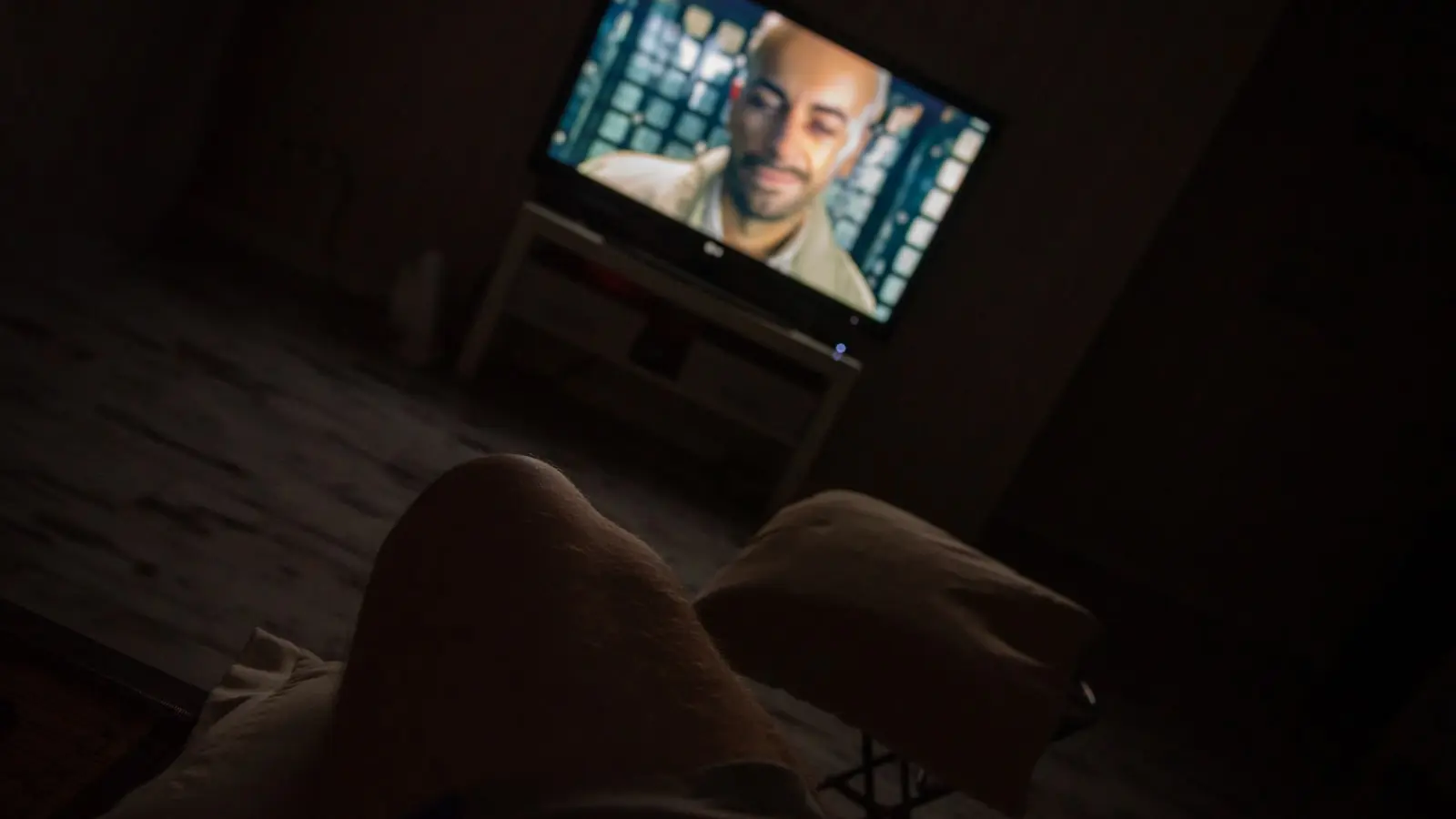
The American Academy of Sleep Medicine identified a precise physiological disruption occurring in bedrooms worldwide in October 2023. Late-night consumption of serialized television directly suppresses melatonin synthesis and fractures restorative sleep cycles. Streaming platforms prioritize continuous engagement through autoplay mechanisms and narrative tension, forcing the human circadian rhythm into a compromised state. The result is chronic sleep architecture degradation.
Consuming highly engaging narrative television before bed increases cognitive arousal and exposes viewers to significant amounts of short-wavelength light. Photoreceptors in the retina communicate directly with the suprachiasmatic nucleus, tricking the pineal gland into perceiving daylight and halting the secretion of sleep hormones. Researchers observed a delay in melatonin release by up to 90 minutes. That represents an hour and a half of biological twilight erased. Binge-watchers suffer from statistically higher rates of insomnia, poorer sleep quality, and increased daytime fatigue compared to those who view a single episode.
The historical context of television consumption involved strict broadcast schedules that provided natural stopping points, whereas modern streaming platforms normalize viewing multiple hours of intense, high-stakes dramas late into the night. Content delivery networks override natural sleep cues with engineered cliffhanger endings. The friction of choice disappears.
The Neurobiology of Cognitive Arousal
When viewers watch high-definition servers push gigabytes of violent narrative or high-tension drama into a darkened bedroom at 2:00 AM, the central nervous system registers immediate physiological threat. Biological systems do not differentiate between fictional narrative tension and actual environmental pressure. The viewing of intense dramas triggers sympathetic nervous system activation. Heart rates elevate. Cortisol and adrenaline flood the bloodstream. The viewer enters a state of acute hyperarousal precisely when physiological systems require down-regulation.
This cognitive arousal directly antagonizes the parasympathetic nervous system, which governs the biological wind-down process required for sleep initiation. Even if the viewer manages to close their eyes immediately after an episode concludes, the prefrontal cortex remains active, processing unresolved plot points and emotional stimuli. (The brain simply refuses to transition). Neural pathways remain primed for action rather than consolidation.
The Photonic Interruption and Melatonin Suppression
Beyond psychological engagement, the mechanical delivery of the content causes severe endocrine disruption. High-definition televisions, tablets, and smartphones emit concentrated short-wavelength blue light. Intrinsically photosensitive retinal ganglion cells absorb this specific light frequency and transmit signals directly to the brain’s master clock.
This photonic bombardment halts the natural production of melatonin, the hormone responsible for signaling biological night. The American Academy of Sleep Medicine data indicating a 90-minute delay in melatonin release materializes as a devastating blow to the first third of the sleep period. The first sleep cycle contains the highest concentration of deep, slow-wave sleep. Pushing sleep onset back by 90 minutes often means bypassing this critical restorative window entirely.
Deep sleep facilitates crucial biological maintenance. The glymphatic system clears metabolic waste products, including amyloid-beta proteins, from neural tissues during this specific phase. Muscular repair initiates. Immune system components regenerate. When binge-watching delays sleep onset, the body prioritizes rapid eye movement cycles later in the night at the expense of this deep slow-wave architecture. The body survives. The brain decays.
Platform Architecture Versus Biological Boundaries
Streaming services engineer their user interfaces to bypass prefrontal cortex decision-making pathways by utilizing ten-second autoplay countdowns that eliminate the natural friction required to power down a device. The loop sustains itself. Online forums dedicated to sleep hygiene frequently document this behavioral trap. Members of digital sleep communities routinely report that autoplay features make it nearly impossible to establish healthy boundaries. The software actively works against the user’s biological needs.
Behavioral economists and user interface designers understand this dynamic completely. The transition from episodic television to continuous streaming replaced the discrete unit of consumption with an infinite scroll of narrative. By ending episodes on unresolved psychological tension while simultaneously cueing the next video file, platforms exploit the Zeigarnik effect—the human psychological tendency to remember and fixate on incomplete or interrupted tasks. The viewer continues watching not out of active desire, but to resolve the psychological discomfort of the cliffhanger. (This assumes the viewer maintains enough conscious awareness to eventually turn the screen off).
Discrepancies in Sleep Parameters
Clinical observations highlight a stark contrast between discrete media consumption and continuous streaming. Researchers categorize the physiological toll by measuring exact sleep parameters.
| Clinical Metric | Single Episode Viewing | Binge Viewing (3+ Episodes) |
|---|---|---|
| Melatonin Onset | Baseline | +90 Minutes Delay |
| Sleep Latency | 15-20 Minutes | 45+ Minutes |
| Slow-Wave Sleep Volume | Normal | Significantly Reduced |
| Cognitive Arousal State | Baseline | Acute Hyperarousal |
| Daytime Fatigue Index | Low | High |
These metrics illustrate a compounding debt. A single night of delayed melatonin onset results in acute fatigue. Repeated exposure to this viewing pattern alters the circadian rhythm permanently, shifting the biological clock later and manifesting as chronic sleep-onset insomnia.
Clinical Interventions and the Digital Sunset
Mitigating this neurological disruption requires aggressive behavioral restructuring rather than pharmacological intervention. Sleep psychologists advocate for the implementation of strict “digital sunsets” at least one hour before the desired bedtime. This protocol demands the cessation of all highly engaging narrative consumption and screen exposure, allowing the autonomic nervous system to return to baseline and melatonin to secrete uninhibited.
Attempting to counter the effects of binge-watching with blue-light-blocking glasses addresses only half the equation. While filtering short-wavelength light prevents the absolute suppression of melatonin, it does nothing to mitigate the severe cognitive arousal generated by the content itself. A viewer wearing amber-tinted lenses while consuming high-stakes political thrillers still experiences elevated cortisol levels. The sympathetic nervous system remains engaged. Sleep architecture fractures anyway.
Effective stimulus control therapy mandates removing the television from the bedroom entirely. The bedroom environment must serve as a strict cue for sleep, not an entertainment center. When individuals sever the associative link between the resting environment and intense psychological stimulation, sleep latency drops precipitously.
Replacing streaming media with low-arousal, non-illuminated reading material allows the prefrontal cortex to disengage without triggering the sympathetic stress response. The objective is neurobiological boredom. Only through the deliberate elimination of engineered narrative tension and artificial light can the brain successfully initiate and maintain the precise biological architecture required for genuine restoration.