Batman Beyond has remained influential because it solved a challenge that defeats many superhero successor stories: it made a new Batman feel necessary without making Bruce Wayne irrelevant. Terry McGinnis brought a different voice, life stage, and set of pressures to the suit, while an elderly Bruce supplied the history, damage, and standards behind the symbol.
Its relatively limited expansion does not reflect a lack of creative potential. The setting is closely tied to a particular future, an earlier animated continuity, and a distinctive mentor-and-protégé relationship. Those strengths also make it harder to use casually while DC continues to develop other versions of Batman across films, comics, games, animation, and licensing.
Key Takeaways
- Batman Beyond works because Terry McGinnis is a distinct Batman, not simply a younger Bruce Wayne.
- Neo-Gotham gives Batman mythology a future shaped by technology, corporate power, and the consequences of Bruce’s long career.
- Its fixed future timeline creates meaningful stakes, but can conflict with other Batman continuities and reinventions.
- Comics, related animation, licensed products, and game appearances show continued interest in the concept, not necessarily a new screen franchise.
- A successful modern continuation would need to preserve Terry, Bruce, and Neo-Gotham as a connected dramatic system rather than rely on nostalgia alone.
The Batman Beyond legacy changed Batman without replacing him
The original premise was direct and unusually durable: Bruce Wayne has retired from active crime-fighting, and teenager Terry McGinnis becomes Batman under Bruce’s reluctant guidance. That structure preserved the essential Batman language—Gotham, the cave, detective work, discipline, fear, and moral limits—while changing who carried its emotional weight.
Terry was not built as a younger copy of Bruce. His family life, school obligations, impatience, humor, and social world gave the role a different rhythm. Bruce often defines himself through isolation and control; Terry is constantly pulled back toward ordinary relationships and responsibilities. The mantle therefore feels inherited rather than duplicated.
Older Bruce is equally central to the Batman Beyond legacy. He is not merely a supplier of equipment and instructions. His age, loneliness, regrets, and damaged relationships make the series an argument about what a lifetime as Batman can cost. Terry challenges Bruce’s habits, while Bruce forces Terry to reckon with the responsibility behind the symbol.
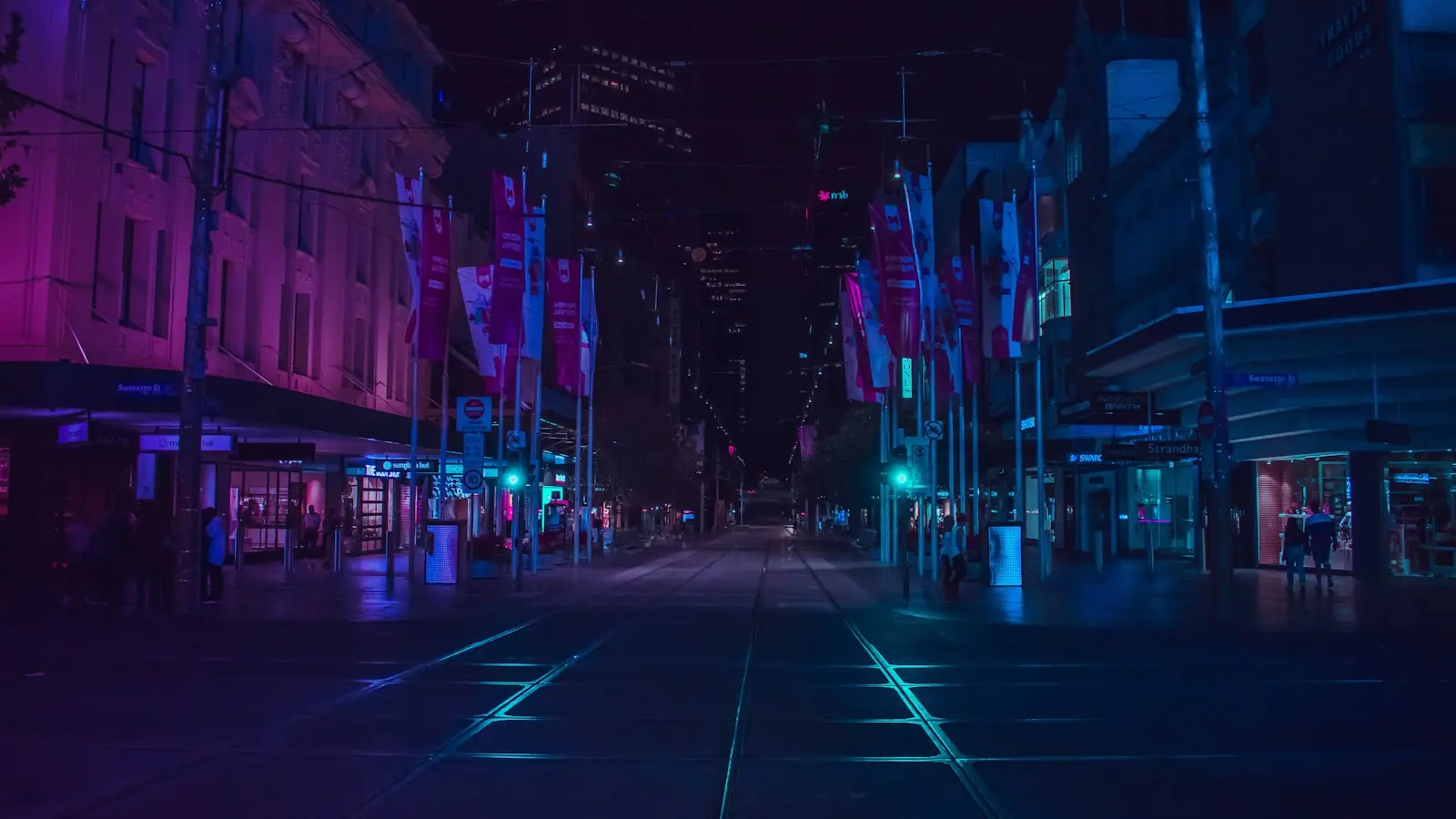
Neo-Gotham completes that proposition. The city retains Gotham’s corruption, spectacle, and menace, but translates them through high-rise sprawl, surveillance, corporate influence, experimental technology, and unfamiliar forms of crime. Its design draws on futuristic and cyberpunk-inflected ideas without being reducible to a single genre label.
The result is a legacy story with a clear emotional reason to exist. It can tell accessible superhero adventures while addressing aging, identity, mentorship, grief, and the question of whether a symbol can outlast the person who created it.
Why future Gotham feels larger than Terry McGinnis alone
Batman Beyond worldbuilding makes Neo-Gotham feel capable of supporting more than one protagonist or plotline. An older Bruce implies decades of unseen consequences: changed alliances, strained friendships, retired heroes, altered institutions, and threats whose influence lasted beyond their first encounters with Batman.
The city itself provides room for expansion. A future police force, corporate sector, transit network, school system, media culture, and criminal underworld can all generate stories that remain recognizably Batman while differing from present-day Gotham narratives. Technology changes the practical meaning of privacy, policing, bodily autonomy, and power.
Legacy characters deepen that scale when their returns reveal change rather than simply offer recognition. An old ally in a new role, a former enemy reshaped by time, or an institution that has become more compromised can show how Gotham evolved under Batman’s long shadow.
A fixed future has a major storytelling advantage: it allows consequences to accumulate. Bruce can grow old. Relationships can end or harden. Institutions can decline, reform, or become unrecognizable. The setting does not need to reset to a familiar default after every story.
That same specificity creates a constraint. If Neo-Gotham is treated as the definitive endpoint of Batman history, it can narrow the choices available to later comics, films, games, and animated projects that want different outcomes for Bruce, Barbara Gordon, Gotham, or the wider DC universe. If it is treated only as one possible future, it gains flexibility but loses some of its sense of consequence.
This is the central trade-off. Rich worldbuilding demonstrates that more stories could be told in Neo-Gotham; it does not mean every possible spinoff would be necessary, practical, or creatively worthwhile.
Why admiration has not automatically produced a Batman Beyond revival
A well-regarded superhero property does not automatically become an always-active franchise line. Batman is regularly reinterpreted through separate comics, animation, games, films, licensed products, and screen continuities. Each version may need its own visual identity, tone, continuity rules, and accessible starting point.
Brand management is one practical limitation. A Batman Beyond revival would need to establish whether it was continuing the original animated world, introducing a new version of Terry McGinnis, or functioning as a standalone future-Batman story. Those are fundamentally different projects, with different expectations around design, character history, tone, and audience entry points.
Continuity management adds another challenge. Neo-Gotham is strongest when it feels like the result of a long, specific Batman history. Yet present-day Batman stories frequently revisit Bruce’s early years, reshape supporting characters, and explore alternate futures. A timeline that is too fixed can restrict other stories; one that is too easily revised can weaken the stakes that made it compelling.
Audience targeting matters as well. The original series can appeal both to viewers who encountered it when young and to audiences drawn to its mature mentor-and-protégé dynamic. A new project would still need to decide whether it is primarily for children, families, longtime animation viewers, general superhero audiences, readers, or players. Broad appeal does not remove the need for a focused release strategy.
Production priorities also matter, although no single business factor should be treated as the definitive explanation for limited follow-ups. Animation requires a creative team, budget, schedule, distribution plan, and a clear place within a broader platform or licensing strategy. Films and games bring their own longer development cycles and competing priorities.
Changes in studio leadership, distribution models, corporate organization, and DC’s wider screen strategy can also interrupt long-range plans. The sensible conclusion is not that Batman Beyond failed or was ignored. Selective use can be a rational way to protect a sharply defined concept while other versions of Batman remain active.
Where Batman Beyond has returned and what those returns show
The original animated series ran from 1999 to 2001, establishing Terry, Bruce, and Neo-Gotham as a distinct screen setting. Its related animated history includes the feature-length release Batman Beyond: Return of the Joker, while later DC animation has also revisited elements of the future setting and its legacy framework.
The property has continued in comics through multiple projects using the Batman Beyond title or Neo-Gotham setting. DC published a Batman Beyond series beginning in 2016, and Batman Beyond: Neo-Gothic arrived as a 2023 miniseries. These releases show that DC has continued to use the premise in print, but they should not be treated as one uninterrupted canon with every animated appearance.
Batman Beyond imagery and characters have also appeared through licensed merchandise, collectible material, crossover content, and selected game-related offerings. A costume, vehicle, downloadable pack, or character inclusion confirms that specific use of the property. It does not, by itself, establish a new animated season, feature film, or full franchise relaunch.
That distinction matters because each format serves a different purpose. A comic can explore a new direction with greater continuity flexibility. A game appearance can celebrate an enduring design. Merchandise can keep the iconography visible. None of those uses is equivalent to a sustained screen commitment.
No new Batman Beyond animated series or feature-film revival has been formally announced by DC or Warner Bros. Development rumors, reported concepts, and fan expectations should remain unconfirmed unless a directly responsible studio issues a public announcement. A revival is creatively plausible, but plausibility is not confirmation.
What a modern continuation would need to preserve
A successful continuation should begin with the Terry McGinnis story rather than assume a recognizable suit is enough. Terry must remain a distinct Batman: resourceful, committed, and capable, but not a younger Bruce repeating the same character arc. His relationships and generational perspective should affect how he investigates crime, responds to authority, and defines justice.
The Bruce-and-Terry relationship must retain friction. Bruce should not become a passive source of exposition, and Terry should not become an obedient replacement. Their strongest dynamic comes from mutual correction: Bruce learns that the mission cannot survive through control alone, while Terry learns why Batman’s standards matter.
Neo-Gotham should feel lived in rather than merely decorated with neon towers and advanced devices. The strongest future-Gotham stories use technology to intensify enduring human problems: inequality, exploitation, misinformation, surveillance, grief, and concentrated power. The future matters when it changes the pressure on characters rather than simply upgrading their equipment.
New antagonists should extend Batman themes of identity, responsibility, fear, justice, and abuse of power. Reusing a classic villain can work when the future setting transforms what that villain represents. A threat that exposes a problem unique to Terry’s era is a stronger foundation than nostalgia alone.
Several formats could extend the setting without demanding a permanent, open-ended screen franchise. A limited animated continuation could revisit the central character dynamics with a focused commitment. A comic or graphic novel could explore a specific corner of future continuity with more flexibility. A game, anthology, or self-contained interactive story could use Neo-Gotham’s vertical cityscape and investigative potential without requiring every Batman property to share one timeline.
The Batman animated series legacy does not depend on constant expansion. It endures because Terry McGinnis, older Bruce Wayne, and Neo-Gotham form a complete dramatic system: a new hero, a damaged mentor, and a city where Batman’s past has consequences. Any future project should build on that system rather than merely repeat its imagery.
FAQ
Is Batman Beyond officially getting a revival?
No new animated series or feature-film revival has been formally announced by DC or Warner Bros. Until a responsible studio confirms a project, proposed revivals and reported development ideas should be treated as unconfirmed.
How does Batman Beyond fit with other DC continuities?
It began as part of a specific animated continuity, but later comics and crossover uses have approached the concept in different ways. It is best understood as a flexible future-Batman framework rather than assuming every Batman Beyond project shares one binding canon.
What official Batman Beyond stories and appearances came after the original animated series?
Confirmed post-series material includes related animation, multiple DC comic projects—including the 2016 Batman Beyond series and 2023’s Batman Beyond: Neo-Gothic—as well as licensed and game-related appearances. These returns show continued use of the property, not a single ongoing screen continuation.