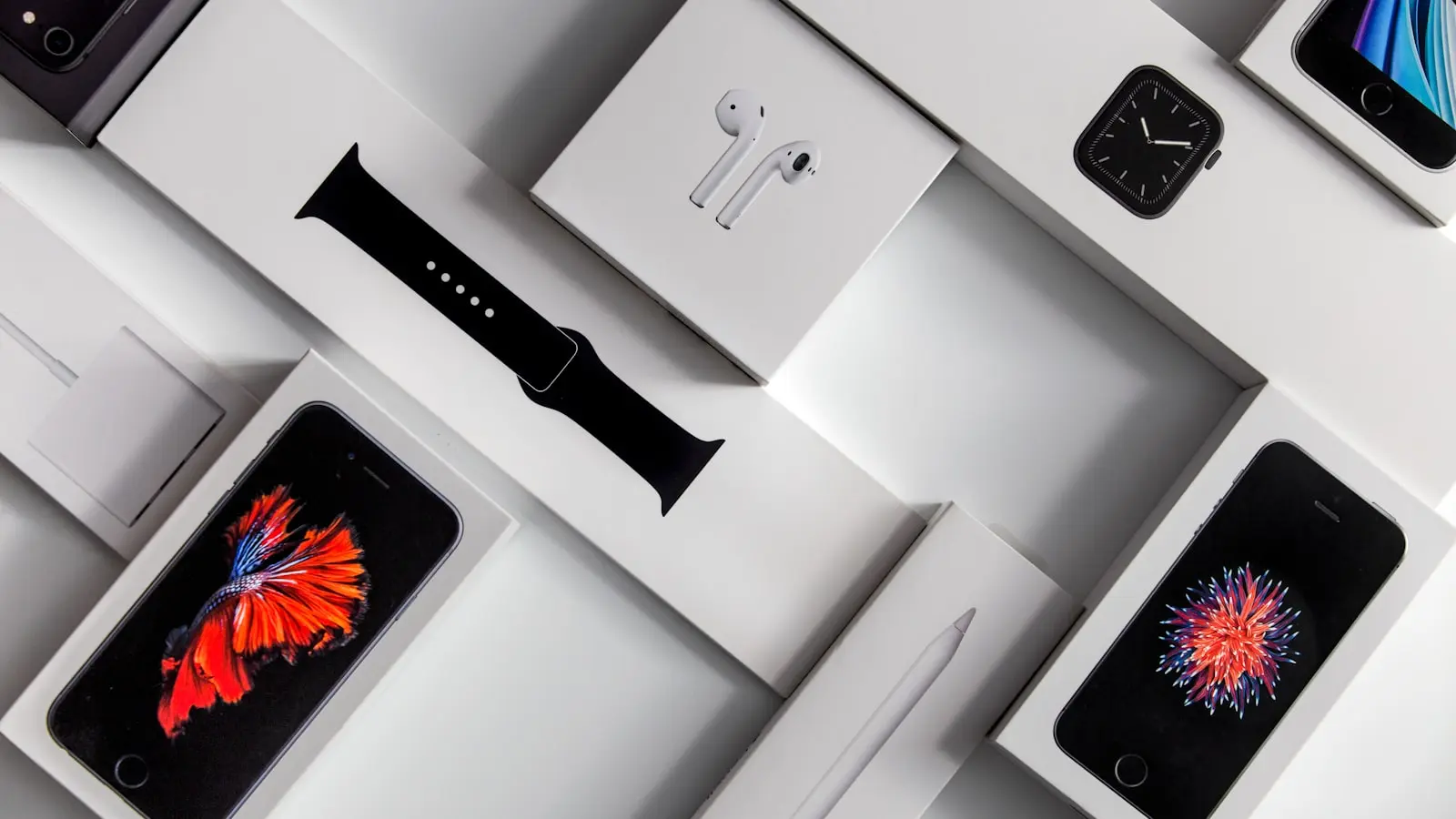

Apple forces a strict hardware baseline starting March 2. The company begins a product refresh cycle designed to eliminate legacy interface bottlenecks across the iPhone, iPad, and entry-level Mac portfolios. Speculation heavily indicates a mandated standardization of MagSafe connectivity and baseline Neural Engine performance in the lowest pricing tiers. Execution starts immediately. The resulting lineup removes structural fragmentation across the consumer hardware stack.
When analysts evaluate supply chain efficiency, overlapping inventories of legacy components present a calculable drain on margins. Managing separate manufacturing pipelines for devices with and without magnetic charging arrays wastes resources. Standardizing the base chassis components across all price points reduces this overhead. A localized product strategy limits scalability. The upcoming product drops finalize the transition toward absolute component uniformity.
The End of Thermal Inefficiency
The smartphone industry struggled with wireless charging thermal dynamics for years before magnetic alignment forced a localized hardware solution. The iPhone 16e, released last year to replace the aging Home Button-equipped iPhone SE, lacked MagSafe connectivity. The forthcoming iPhone 17e rectifies this architectural omission. Standard Qi charging relies on the user perfectly aligning the device over the induction coil. Millimeters of misalignment cause significant power loss. This lost power converts directly into heat. Excessive thermal buildup degrades lithium-ion battery chemistry over sustained charging cycles.
Magnetic alignment locks the internal and external coils into optimal proximity. It maximizes power transfer efficiency. It minimizes heat generation. (Thermodynamics punishes sloppy hardware design). By integrating MagSafe into the bottom tier of the smartphone lineup, Apple eliminates the thermal penalty previously suffered by budget buyers. The charging wattage scales reliably to 15W instead of capping at the highly inefficient 7.5W standard forced upon legacy unaligned devices.
Furthermore, this hardware inclusion relies on an internal NFC handshake. When a MagSafe accessory connects, the device reads an embedded NFC tag to identify the accessory type, adjusting charging speeds and interface protocols accordingly. Legacy iPhones missed this data layer entirely. By pushing this requirement to the iPhone 17e, accessory fragmentation ends. Every phone shipped will serve as a secure physical mount for battery packs, wallets, and vehicle docks. Accessory manufacturers will no longer divide their addressable market between legacy and modern chassis designs. They build for one standard. They sell to one unified market.
Mandating Local Compute Silicon
Last year, Apple deployed its localized machine learning suite across premium devices while subsequently launching a base iPad incapable of running the software. This created a dual-tier software ecosystem. The incoming iPad 12 bridges this processing gap by integrating the A18 chipset. Processing large language models locally requires rigid hardware minimums. Memory bandwidth and Neural Engine operations per second determine whether a task executes fluidly or stalls the operating system.
Previous entry-level tablets operated as basic consumption nodes. They lacked the memory ceiling required to load complex operational models into RAM. When developers attempt to push generative text operations through a 4GB memory bottleneck, the system relies on swap memory and immediately throttles execution. The A18 architecture forces an upgrade to an 8GB unified memory baseline. (Finally moving past an unacceptable hardware limitation). The processor delivers dramatically higher Trillions of Operations Per Second compared to the preceding silicon. Local artificial intelligence operations rely on high execution speeds to prevent severe battery drain. Offloading tasks to cloud servers drains less immediate battery but introduces network unreliability. Local processing burns more instant power but finishes the task faster, allowing the silicon to enter low-power idle states quicker. Efficiency dictates local execution.
This compute mandate enables the scheduled Siri system enhancements. Voice requests undergo initial natural language parsing locally before complex queries route through external servers utilizing Google Gemini infrastructure. If the base hardware cannot handle the initial voice parsing, the resulting latency destroys the user experience. Mandating the A18 chip across the tablet floor ensures every device sold possesses the processing overhead necessary for instantaneous local execution. Image generation and localized text synthesis become ubiquitous standards rather than premium tier features.
Restoring Peripheral Bandwidth
The computing segment faces a similar structural overhaul. Apple relies on retail partners to clear out aging M1 MacBook Air inventory. That specific supply chain channel shows critical depletion ahead of the scheduled media experience in New York City on March 4. Market indicators point to a newly designed sub-$999 notebook powered by an A18 Pro architecture.
The fundamental shift involves power delivery infrastructure. The legacy M1 MacBook Air restricted hardware interaction to exactly two USB-C ports. Connecting the device to wall power immediately consumed fifty percent of the total I/O bandwidth. Users requiring external displays while tethered to a wall outlet lost all remaining peripheral expansion. Data transfer stalled. The physical controller dynamically negotiated power delivery and DisplayPort protocol over the same physical pins simultaneously, stressing the interface.
Reintroducing the dedicated MagSafe power port to the absolute bottom of the computing tier solves this bandwidth crisis. Moving power delivery off the data lanes frees both USB-C channels for high-speed peripheral connections. (Utility supersedes aesthetic minimalism). Every Mac laptop sold as new will possess a dedicated power interface that operates independently of the data controllers. This shift standardizes user expectations across the entire computing portfolio. It prevents budget users from experiencing severe data bottlenecks under heavy peripheral loads.
The Supply Chain and Developer Reality
Hardware parity simplifies software development. When every device on the market supports magnetic accessory alignment and local neural processing, developers build applications assuming those features exist. They stop writing fallback code for hardware that lacks the requisite sensors or memory arrays. Predictability accelerates deployment.
Consider the financial leverage of component scale. Procuring identical memory modules and magnetic charging arrays across millions of budget and premium units drives down per-unit manufacturing costs. Apple uses sheer volume to dictate pricing to component suppliers. Fragmented hardware lines reduce this purchasing leverage.
| Hardware Tier | Legacy Bottleneck | Modern Baseline | Systemic Impact |
|---|---|---|---|
| Entry iPhone | Standard Qi Charging | MagSafe Alignment | Reduces thermal wear and standardizes mount ecosystems |
| Entry iPad | 4GB RAM, Low NPU Speed | A18, 8GB RAM Floor | Enables latency-free local AI compute and generation |
| Entry Mac | 2 USB-C (Shared Power) | Dedicated MagSafe Port | Frees PCIe data lanes for high-speed peripheral bandwidth |
The March rollout represents a methodical execution of component standardization. Apple eliminates the final remnants of its legacy hardware decisions by cutting off production of non-compliant devices. By forcing advanced processing capabilities and dedicated physical interfaces into the most accessible price points, the company establishes a hard operational floor for the next five years of software development. Consumers gain device longevity. Developers gain architectural predictability. The era of the compromised entry-level device ends.