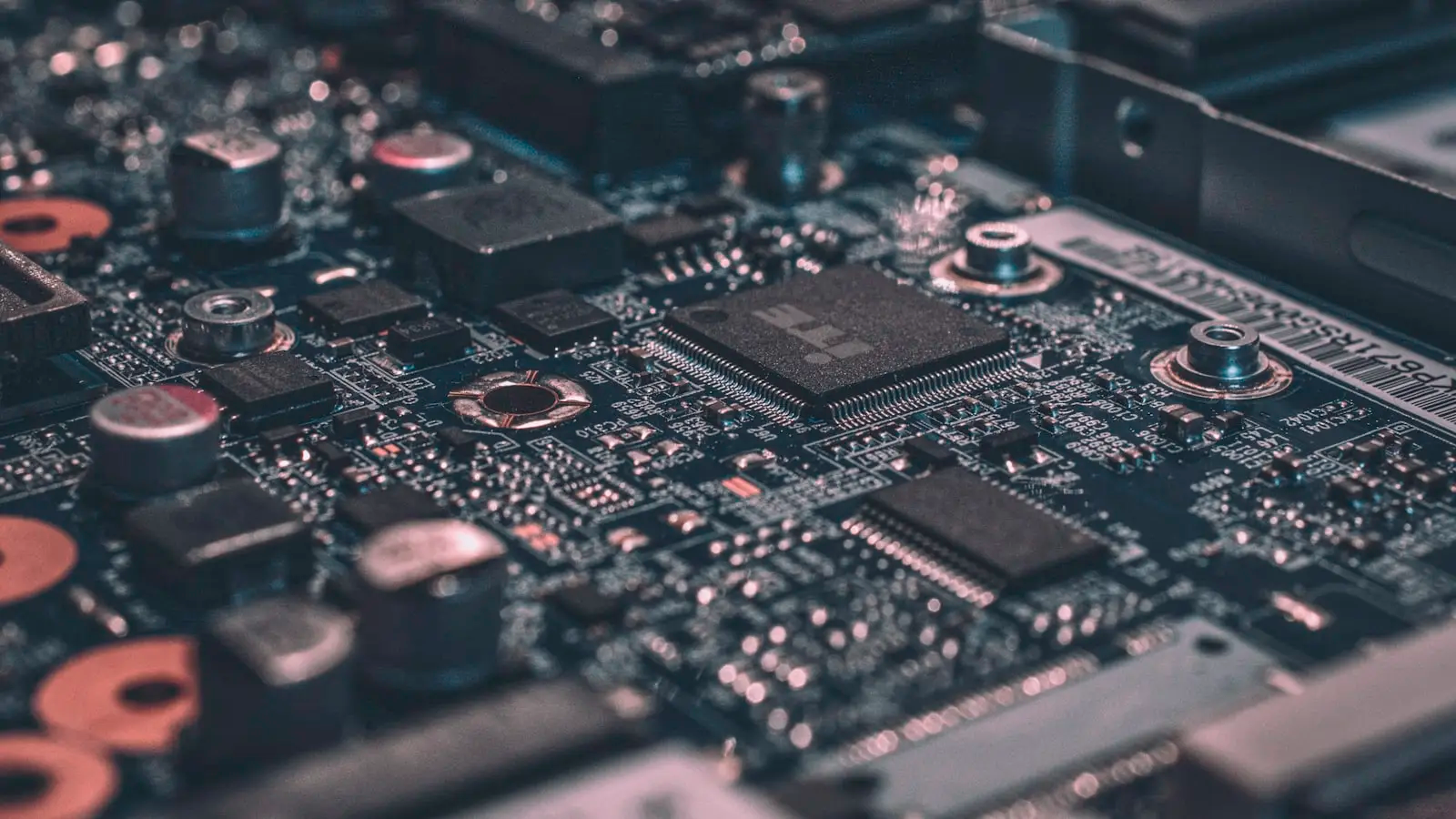

The most significant bottleneck in the artificial intelligence revolution is not algorithms or even silicon supply. It is heat. Every watt of computational power funneled into a GPU to train a large language model is converted, almost entirely, into thermal energy that must be aggressively removed. Failure to do so results in thermal throttling, reduced performance, and eventual hardware failure. This physical reality has turned the unglamorous world of thermal management into a critical battleground, a fact underscored by semiconductor startup Frore Systems raising a $143 million Series D at a staggering $1.64 billion post-money valuation.
The investment round, led by MVP Ventures, signals a profound shift in venture capital focus. While billions pour into AI model developers, sophisticated investors are now targeting the foundational supply chain—the picks and shovels of the AI gold rush. This move validates that the performance promised by next-generation AI accelerators from Nvidia, AMD, and Qualcomm is entirely dependent on the ability to keep them from melting. It is a market betting on the inescapable laws of thermodynamics.
Frore Systems, founded by two former Qualcomm engineers, did not initially set out to cool massive data centers. Its original mission was focused on air-cooling for phones and other small, fanless electronics. The company’s trajectory was fundamentally altered by a suggestion from Nvidia CEO Jensen Huang, who pointed them toward the existential cooling challenges faced by AI data centers. That pivot has now positioned Frore at the epicenter of the industry’s most pressing physical constraint.
Deconstructing the $1.64 Billion Valuation
The $143 million Series D injection brings Frore Systems’ total capital raised to $340 million. The participation of investors like Fidelity, Mayfield, Addition, and the venture arms of strategic partners like Qualcomm Ventures and Alumni Ventures, provides a clear picture of both financial and industry-level confidence. These are not speculative bets; they are calculated investments into a company solving a fundamental, and profitable, problem.
The valuation places Frore Systems firmly in the unicorn club alongside other critical AI semiconductor ecosystem players. For context, its valuation now surpasses that of specialized chip designer Positron ($1 billion) and sits in the same strategic conversation as AI chip company Recursive Intelligence ($4 billion). The difference is that Frore does not compete with chip designers; it enables them. This symbiotic relationship makes it an indispensable component of the entire value chain, justifying a premium valuation that might otherwise seem inflated for a “cooling” company.
What investors are buying is not just a product, but a solution to a scaling crisis. A modern AI server rack can consume over 100 kilowatts of power—enough to power dozens of homes. Traditional air conditioning and fan-based cooling systems, which have dominated data centers for decades, are hitting a wall of physical limitation. They simply cannot remove heat fast enough from the densely packed GPUs that form the backbone of AI infrastructure. The cost to power the cooling infrastructure is becoming as significant as the cost to power the compute itself. Frore’s valuation is a direct reflection of the economic value of solving this inefficiency.
A Pivot Driven by Physics and Jensen Huang
Frore’s journey from consumer electronics to high-performance computing (HPC) illustrates the brutal physics of semiconductor scaling. Initially, the company’s air-based cooling technology aimed to make laptops and smartphones thinner and quieter by eliminating fans. This is a complex engineering challenge, but one that operates on a completely different scale from the problem of data center thermal management.
The turning point, prompted by Nvidia’s chief executive, was an acknowledgment that the thermal density of AI accelerators had surpassed the capabilities of air. Power density—the amount of electrical power consumed per unit of area—in a chip like Nvidia’s H100 or AMD’s MI300X is immense. Air, as a cooling medium, has a relatively low thermal conductivity. Pushing more air faster generates noise, consumes enormous amounts of energy, and eventually yields diminishing returns. The heat cannot escape the silicon die fast enough.
This is where liquid cooling becomes a necessity. Liquids, particularly engineered dielectric fluids, can absorb and transport heat far more efficiently than air. Frore’s pivot involved adapting its core principles to this new medium, designing systems that could be integrated directly with processors from Nvidia, Qualcomm, and AMD. This strategic shift, guided by a key customer and market leader, de-risked the company’s technology roadmap and aligned it perfectly with the industry’s most urgent need.
How Liquid Cooling Solves the AI Heat Problem
To understand Frore’s value, one must first understand the failure of traditional methods. An AI server is not a single computer; it is a dense array of processors, each generating heat comparable to a stovetop burner. Air cooling relies on moving massive volumes of chilled air through these servers. The process is inefficient. Much of the energy is wasted cooling the entire room, not just the chips.
Liquid cooling takes a more direct approach. There are several methods, but they generally fall into two categories:
- Direct-to-Chip Cooling: A cold plate containing circulating liquid is mounted directly onto the GPU. The liquid absorbs heat from the chip and carries it away to a heat exchanger, where it is transferred to a secondary water loop and eventually expelled from the building. This is targeted and highly efficient.
- Immersion Cooling: Entire servers are submerged in a non-conductive, dielectric fluid. The fluid absorbs heat from all components, circulates through a heat exchanger, and returns to the tank. This is the most effective method but requires a radical redesign of data center infrastructure.
Frore’s technology operates within this landscape, offering solutions that promise high efficiency without necessarily requiring a complete overhaul of existing data center designs (a critical factor for adoption). The technical challenge is not just pumping liquid, but managing flow rates, preventing leaks, and ensuring reliability over a multi-year operational lifespan. A single leak can destroy millions of dollars worth of hardware. The intellectual property and engineering precision required to build these systems at scale are what investors are funding. The end result for a data center operator is the ability to pack more GPUs into a single rack, run them at their maximum sustained performance without throttling, and reduce the massive energy bill associated with air conditioning. More compute per square foot, per watt. That is the goal.
The Broader Ecosystem Play
The investment in Frore is a clear indicator that the market’s understanding of AI has matured. The initial hype focused on the models themselves—the software. Now, the capital is flowing to the hardware and infrastructure that make those models possible. Cooling is just one piece of this puzzle. Other critical areas receiving intense investment include:
- Power Delivery: Data centers are straining local power grids. Startups are working on more efficient power distribution units (PDUs), on-site energy generation, and grid management software.
- Interconnects: The speed at which data moves between GPUs (e.g., Nvidia’s NVLink) and between server racks is a major performance factor. Companies developing optical interconnects and next-generation networking fabrics are also seeing massive valuations.
- Advanced Packaging: As chips become more complex, the methods used to connect different silicon dies together (chiplets) are becoming crucial. This is a highly specialized area of semiconductor manufacturing.
Investors like MVP Ventures, Fidelity, and Addition are no longer just betting on a single AI application’s success. They are building a portfolio that captures value across the entire AI technology stack. If any AI model company succeeds, it will need more GPUs. More GPUs will require more power, more networking, and critically, more cooling. By investing in a company like Frore, they secure a return regardless of which specific AI model wins the market. It is a fundamental infrastructure play on the entire sector’s growth.
Final Analysis The Inescapable Constraint
Ultimately, the $1.64 billion valuation of Frore Systems is not about hype. It is a sober acknowledgment of physics. The relentless march of Moore’s Law has been replaced by a new paradigm where performance gains are tied to power consumption and thermal management. A company cannot simply design a faster chip without also designing a viable way to cool it. (Frankly, for years, this was treated as an afterthought).
The future of artificial intelligence will be built in data centers that look very different from today’s. They will be denser, consume more power, and rely on liquid cooling not as a luxury for niche applications, but as a standard, non-negotiable requirement. Frore Systems, through a combination of engineering prowess and a strategically timed pivot, has positioned itself as a critical enabler of that future. The valuation is not just for the company’s current products, but for its gatekeeper role in unlocking the next decade of computational progress.