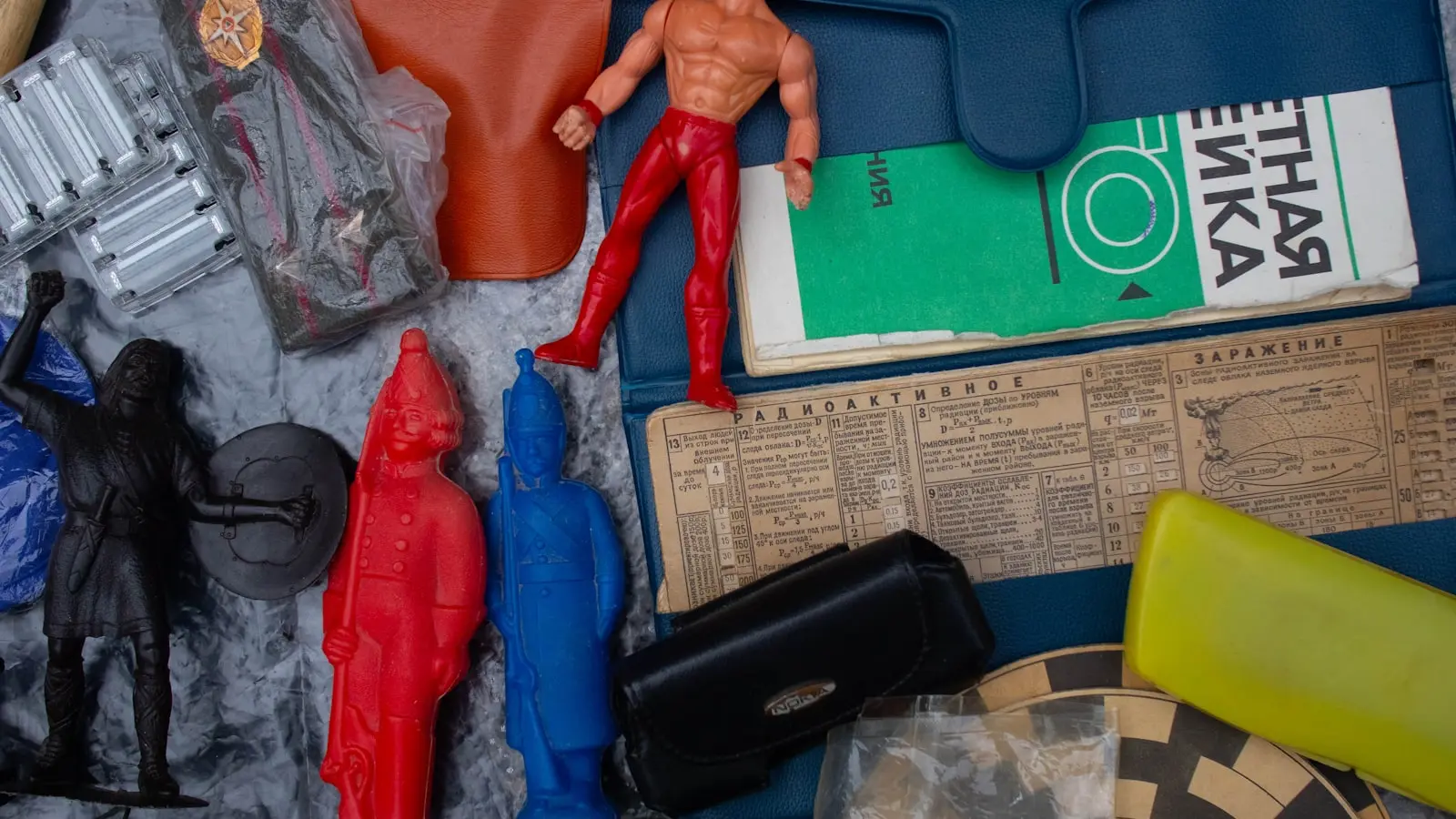
Inside climate-controlled storage facilities, where ultraviolet light is systematically eliminated and humidity remains at a constant fifty percent, mass-produced polyvinyl chloride figures from the Reagan era currently command automotive prices. Capital flows predictably migrate from traditional equity markets into alternative asset classes during periods of economic transition, yet the current run on 1980s pop culture memorabilia represents a fundamentally distinct structural shift. According to January 2024 market reporting from The Toy Insider and verified Heritage Auctions data, mint-condition action figures produced between 1977 and 1989 have appreciated by over 300 percent across a trailing five-year window. The market responds aggressively to scarcity. It also responds to mortality.
Following the recent passing of He-Man co-creator Roger Sweet, a pristine, professionally graded Skeletor figure crossed the auction block and hammered at a record-breaking $15,000. This specific transaction crystallized a broader economic reality that analysts have tracked for the past half-decade. High-earning Generation X professionals are liquidating standard stock portfolios to acquire original Star Wars Kenner lines and first-edition Masters of the Universe blister packs. They no longer classify these purchases as a hobby. They classify them as alternative asset investing.
The Broadcast-Merchandising Architecture
To understand the current valuation of these specific plastic artifacts, analysts must examine the industrial architecture that generated them. The toy market of the 1980s, engineered by designers like Sweet and Mark Taylor, successfully executed one of the most lucrative corporate integrations in modern media history. Prior to this era, toys existed largely independent of serialized narrative frameworks, relying instead on generic play patterns or singular film releases. The 1980s overhaul synthesized syndicated television animation directly with robust plastic figure merchandising, effectively transforming twenty-two-minute afternoon broadcast slots into daily narrative commercials.
This structural integration built a massive psychological infrastructure within an entire generation of consumers. When children watched He-Man defend Castle Grayskull, they absorbed a continuous, reinforced demand cycle. (The genius lay in structural integration, not just plastic sculpting). The figures themselves functioned as physical tokens of a shared cultural broadcast, rendering them highly potent vessels for subsequent nostalgia.
Decades later, that latent psychological demand collides with peak prime-earning years. The children who consumed the original broadcasts now control significant capital reserves, and they deploy that capital to reclaim physical artifacts from a highly optimized entertainment monopoly.
The Mechanics of Condition and Grading
The astronomical price scaling within this secondary market relies entirely on institutionalized condition verification. Without standardization, secondary markets collapse under the weight of fraud and subjective interpretation. Enter the independent grading agencies. Companies like the Action Figure Authority (AFA) execute a function identical to bond rating agencies in traditional financial markets. They assess the structural integrity of the cardboard backing, the clarity of the plastic blister bubble, and the paint application on the figure itself, subsequently assigning a numerical grade before permanently sealing the artifact in an acrylic vault.
The irony remains stark. Objects specifically engineered for tactile destruction in neighborhood sandboxes achieve peak financial value only when permanently removed from human contact.
Market data indicates that the premium applied to graded, sealed figures operates on an exponential curve. A loose, unboxed original Luke Skywalker figure might trade for forty dollars on secondary platforms. That exact same figure, sealed on its original unpunched 12-back card and graded at a 90 near-mint level, triggers five-figure bidding wars among institutional collectors and private wealth managers.
Core Value Multipliers in Vintage Toy Assets
- Unpunched Cardbacks: Packaging where the retail peg-hole remains intact, proving the item never hung on a store display.
- Clear Blisters: Plastic bubbles that exhibit zero yellowing from ultraviolet light degradation.
- First-Wave Releases: Initial production runs featuring early manufacturing variations before molds degraded or paint applications changed.
- Creator Provenance: Items directly associated with, or originating from the estates of, legendary designers like Mark Taylor or Roger Sweet.
Community Displacement and the Scarcity Squeeze
When aggressive capital enters a traditionally accessible market, demographic displacement follows immediately. On digital forums like r/ActionFigures and dedicated vintage collecting message boards, the atmosphere registers as distinctly fractured. Members routinely express mixed emotions, mourning the loss of legendary industry pioneers while lamenting the absolute financialization of their childhood memories. The soaring entry costs have comprehensively priced average nostalgic fans out of the hobby they helped build.
This tension highlights the fundamental conflict between cultural heritage and market capitalism. As high-net-worth individuals and alternative asset funds sweep up available mint-condition supply, the remaining inventory experiences a severe supply squeeze. (A brutal realization for the playground crowd). The average enthusiast, possessing perhaps two hundred dollars of disposable income per month, cannot compete with algorithmic bidding software and private equity buyers dropping fifteen thousand dollars on a skeletal villain from a defunct cartoon.
Heritage Auctions data confirms that the barrier to entry will only continue to rise. As the total supply of sealed, mint-condition 1980s figures slowly diminishes due to environmental degradation or permanent absorption into private museum collections, the baseline cost floor elevates.
The current landscape effectively transforms nostalgic memory into a luxury good. The original television broadcasts remain freely accessible through streaming platforms, yet the physical anchors of that era trade behind acrylic walls at automotive prices. When society evaluates where capital currently flows, the migration toward perfectly preserved polyvinyl chloride indicates a deep collective desire to purchase tangible stability. As long as inflation pressures traditional markets and Gen X retains purchasing dominance, the valuation of vintage plastic will continue its aggressive upward trajectory.